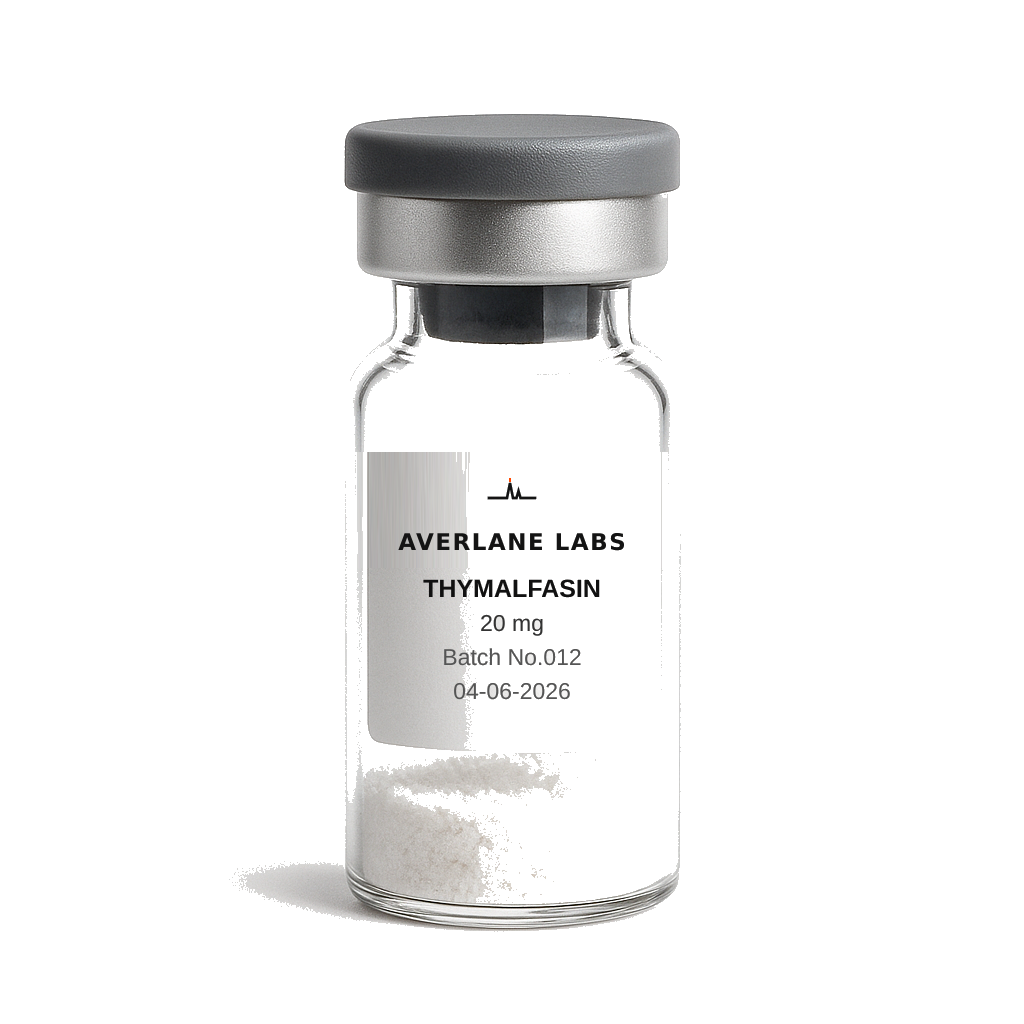
Thymalfasin 20mg vial
Certificate of Analysis available on request for the current lot.
Complete the setup
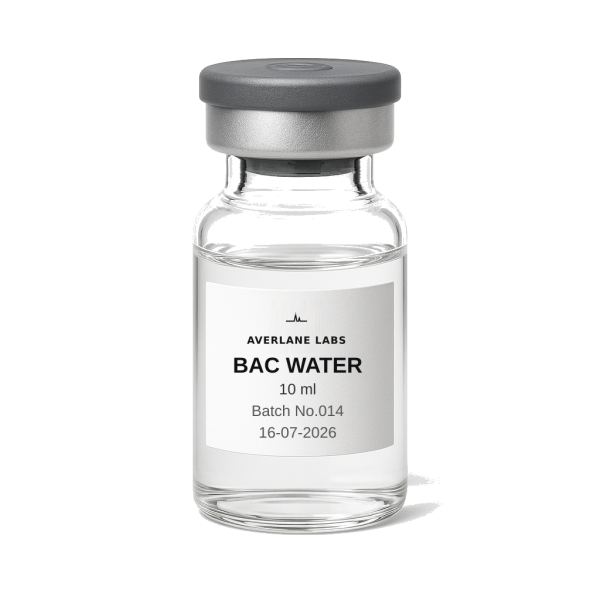
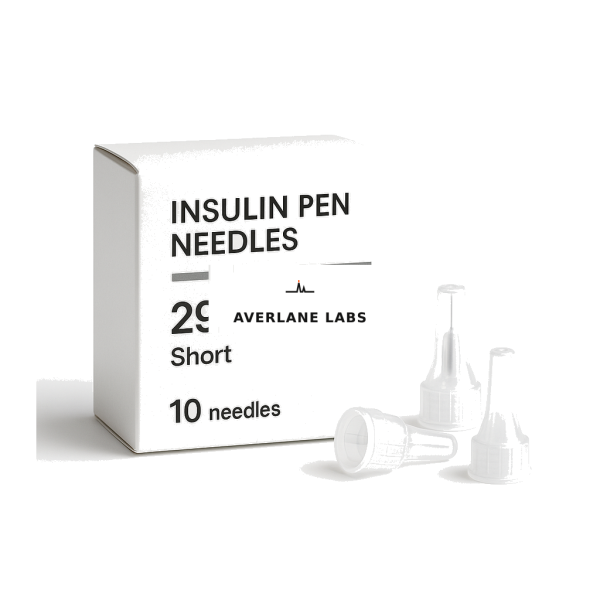
Reconstitution and bench supplies researchers pair with Thymalfasin 20mg vial
NOT FOR HUMAN CONSUMPTION
Thymalfasin is best viewed as an immunomodulatory peptide drug based on thymosin alpha-1 (Tα1), not a broad “immune booster” with uniformly proven benefits across many diseases. Its clearest historical medical use has been chronic hepatitis B in some countries, and it has also been studied extensively in cancer, sepsis, COVID-19, and other infection-related settings. The overall clinical picture is mixed: there is meaningful evidence of immunologic activity and some supportive clinical data in selected indications, but several proposed uses remain investigational or inconsistent, and it is not FDA-approved in the United States.
Additional benefits of thymalfasin under investigation
| Benefit | Take-away |
|---|---|
| 1. Chronic hepatitis B | This is the best-established traditional indication. Product assessments and older reviews describe thymalfasin for chronic hepatitis B in adults with compensated liver disease, but this does not make it a universally adopted first-line global standard today. |
| 2. Cancer adjunct / immune support | Thymalfasin has been studied as an adjunct in several cancers because of its immune-restorative effects, but the strength of evidence varies by tumor type and setting. |
| 3. Sepsis | This is a major current research area. A 2025 BMJ trial found no clear evidence that thymosin α1 reduced 28-day mortality in adults with sepsis, which is an important corrective to earlier optimism. |
| 4. Viral infection support | Reviews describe broad antiviral and immune-enhancing rationale in hepatitis, HIV, and respiratory viral disease, but the evidence is uneven across conditions. |
| 5. Vaccine adjuvant interest | Thymalfasin has been explored to enhance vaccine responses in immunologically weaker populations, but this remains a niche, not a routine standard use. |
| 6. COVID-19 and acute immune dysfunction | It has been studied in COVID-19 and other acute inflammatory settings, but those uses remain investigational and not firmly established. |
| 7. Generally favorable short-term tolerability | Reviews covering large numbers of treated patients describe thymosin α1 as generally well tolerated, but that does not mean every indication is proven effective. |
| 8. Not a proven general-purpose immune enhancer | Marketing often goes wider than the evidence supports; the best-supported framing is still a narrower immunomodulatory peptide drug with indication-specific evidence. |
2. Molecular mechanism of action
2.1 Receptor pharmacodynamics
Thymalfasin does not behave like a classic single-receptor small-molecule drug. It is a 28-amino-acid immunomodulatory peptide derived from thymosin alpha-1 and is thought to act through multiple immune pathways, including enhancement of T-cell function, dendritic-cell activity, antigen presentation, and innate/adaptive immune coordination. In practical terms, its pharmacology is better understood as immune rebalancing / immune support than as one sharply defined receptor effect.
2.2 Downstream biology
| Pathway / theme | Functional outcome | Context |
|---|---|---|
| T-cell and dendritic-cell support | Improved adaptive immune function | Infection / cancer immunology |
| MHC and antigen-presentation effects | Better immune recognition proposed | Viral infection / tumor immunity |
| Cytokine / immune-balance modulation | May reduce immune dysfunction rather than simply “stimulate immunity” | Sepsis, viral disease, oncology |
| Lymphocyte recovery support | Possible mitigation of treatment-related lymphocytopenia in some oncology settings | Cancer supportive care |
These mechanisms are biologically plausible and well aligned with the peptide’s reputation, but they still do notautomatically translate into strong clinical benefit in every disease setting.
3. Pharmacokinetics
Route: usually subcutaneous injection.
Thymalfasin is typically formulated as an injectable peptide, often in 1.6 mg vials in marketed products such as Zadaxin. Its practical value does not come from unusual delivery technology; instead, it is a peptide immunomodulator given parenterally to exert systemic immune effects.
4. Pre-clinical and clinical evidence
4.1 Chronic hepatitis B
This is the best-supported traditional niche. Older reviews and product-assessment documents describe thymalfasin as used in adult chronic hepatitis B with compensated liver disease, and older trials reported virologic and serologic response signals. That said, this is a historic and region-specific strength, not proof that it is now the dominant global standard in HBV care.
4.2 Cancer adjunct use
Thymalfasin has been investigated as an adjunct in oncology because of its ability to support immune competence, especially in settings where lymphocyte suppression matters. Recent observational work in unresectable locally advanced NSCLC suggested improved lymphocyte recovery and better tolerance of consolidative immunotherapy, but that remains far from definitive proof across oncology as a whole.
4.3 Sepsis
This is where the modern evidence became more sobering. Although thymosin α1 had earlier supportive meta-analytic and exploratory literature, the 2025 TESTS randomized trial in BMJ found no clear evidence that it reduces 28-day all-cause mortality in adults with sepsis. That makes sepsis a good example of a biologically plausible use where the highest-quality recent evidence did not confirm a major clinical benefit.
4.4 Viral infections more broadly
Reviews continue to describe thymosin α1 as relevant to viral infectious diseases, including hepatitis viruses and other immune-stress states. But outside specific settings, the evidence is broad in concept and narrower in certainty. The right phrasing is promising, indication-dependent, and mixed, not “proven broad antiviral therapy.”
5. Emerging clinical interests
| Field | Rationale | Status |
|---|---|---|
| Chronic hepatitis B | Historical approved/marketed use in some countries | Most established use case, though not universally central today |
| Cancer supportive immunomodulation | Lymphocyte recovery and immune competence | Supportive but still indication-specific |
| Sepsis | Immune dysregulation target | High interest, but recent RCT negative for clear mortality benefit |
| Vaccine adjuvant / poor immune response | Immune-enhancement rationale | Exploratory / niche |
| COVID-19 / acute viral immune dysfunction | Broad antiviral-immunologic rationale | Investigational |
6. Safety and tolerability
The safety picture is generally encouraging in the short term. A 2024 narrative review covering more than 11,000 patients described thymosin α1 as generally well tolerated across clinical studies. That said, “generally safe” is not the same as “proven effective,” and the maturity of the evidence still varies a lot by indication.
7. Contraindications and cautions
Use extra caution with:
- treating thymalfasin as a proven universal immune enhancer, because the evidence is indication-specific and mixed.
- assuming positive immunologic rationale guarantees better hard clinical outcomes, because the 2025 sepsis RCT did not show clear mortality benefit.
- treating it as FDA-approved in the U.S., because current authoritative drug databases state it is not FDA-approved.
- replacing established antiviral, hepatology, oncology, or ICU care with thymalfasin alone, because it is best framed as adjunctive / indication-specific, not a catch-all therapy.
8. Comparative practical matrix
| Feature | Thymalfasin |
|---|---|
| Main strength | Immunomodulatory peptide drug |
| Best-supported use case | Chronic hepatitis B in some countries |
| Clinical evidence depth | Meaningful but mixed across indications |
| Core limitation | Broad biologic promise, uneven proof of clinical benefit |
| Main mechanism | T-cell / dendritic-cell / immune-balance modulation |
| Short-term tolerability | Generally favorable |
| Main safety concern | More about uncertain efficacy by indication than major toxicity |
| Best practical framing | Narrow-to-moderate evidence immunomodulator, not a universal immune booster |
9. Regulatory landscape
Thymalfasin is best understood as a marketed peptide drug in some countries and an investigational / non-FDA-approved product in the United States. A regulatory assessment document describes marketed thymosin alfa-1 injection (thymalfasin) products, while NCATS explicitly notes that thymalfasin is not approved by the FDA but is used in China and some other countries.
10. Future directions
The most useful future work would be:
- better indication-specific randomized trials,
- clearer distinction between immune biomarker improvements and hard clinical outcomes,
- more precise identification of responder subgroups,
- and continued separation of credible adjunctive use from broad “immune-enhancement” marketing. These are the main gaps visible in the current literature.
Best balanced summary
Thymalfasin is best viewed as a clinically relevant but unevenly validated immunomodulatory peptide based on thymosin alpha-1. Its strongest historical footing is in chronic hepatitis B in some countries, while newer uses in cancer, sepsis, and viral immune dysfunction remain more mixed or investigational. It appears generally well tolerated, but it should be framed as an indication-specific peptide drug rather than a proven broad-spectrum immune therapy.
Selected references
- Dinetz E, et al. Comprehensive Review of the Safety and Efficacy of Thymosin Alpha 1 in Clinical Studies. Best high-level modern review for safety and broad efficacy framing.
- Tao N, et al. Thymosin α1 and Its Role in Viral Infectious Diseases. Best recent review for antiviral/infectious-disease context.
- BPOM assessment report for Zadaxin / thymalfasin injection. Best direct product-level source for formulation and chronic hepatitis B indication language.
- Wu J, et al. The efficacy and safety of thymosin α1 for sepsis (TESTS). Best recent high-quality source showing no clear mortality benefit in sepsis.
- NCATS Inxight Drugs: Thymalfasin. Best concise current source for the important regulatory point that it is not FDA-approved in the U.S.
Researcher reviews
No reviews yet for this lot line. Verified purchasers can leave the first one.
Reviews
There are no reviews yet.