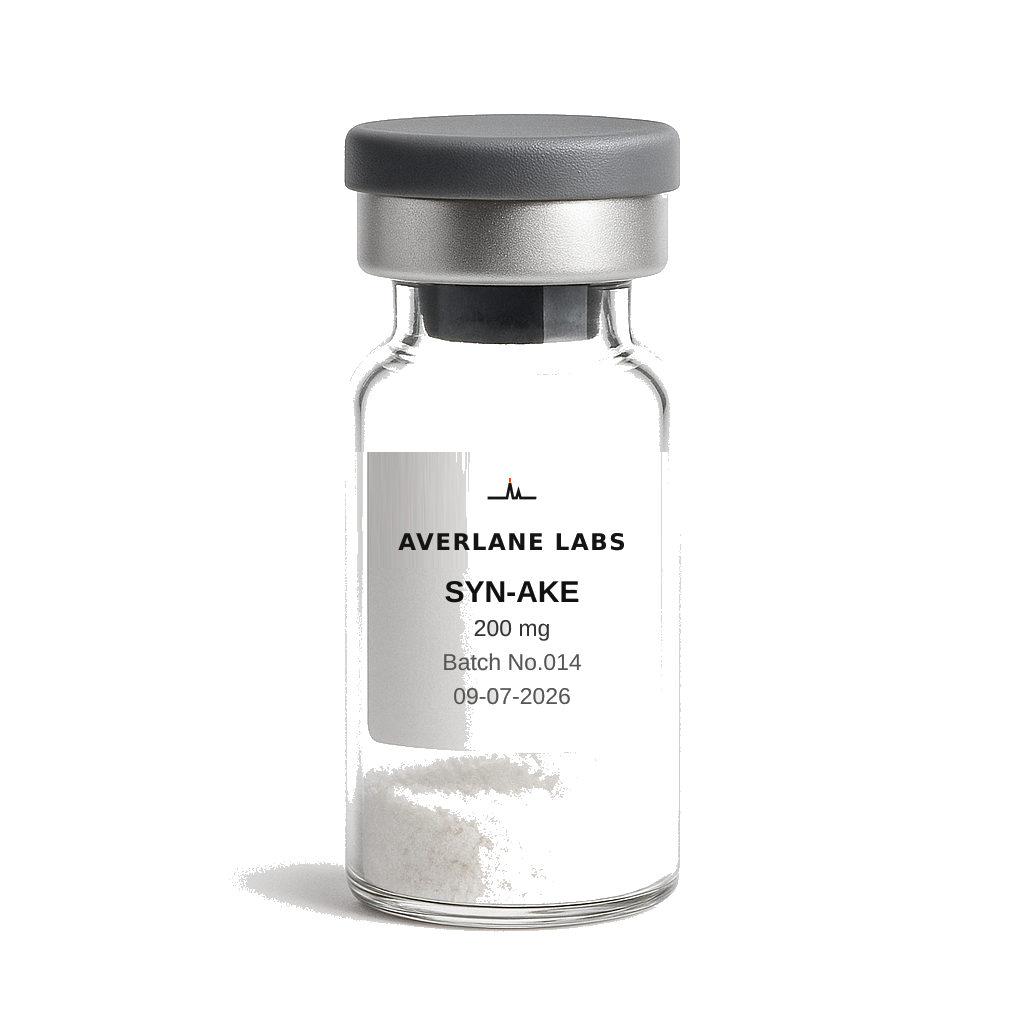
Syn-ake 200mg vial
Certificate of Analysis available on request for the current lot.
Complete the setup
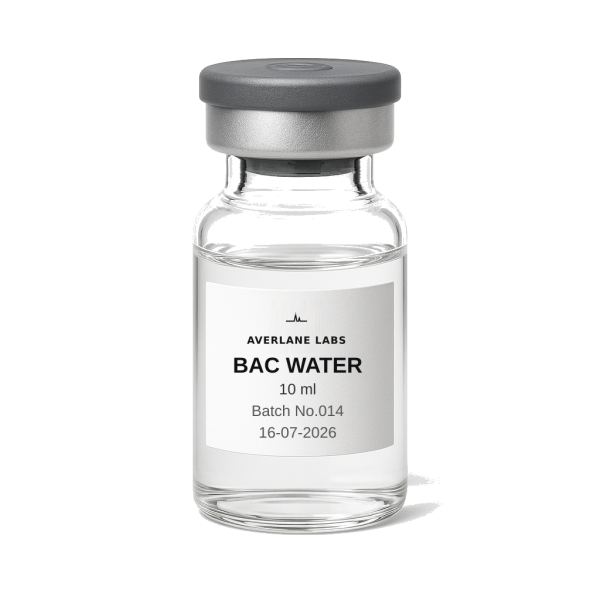
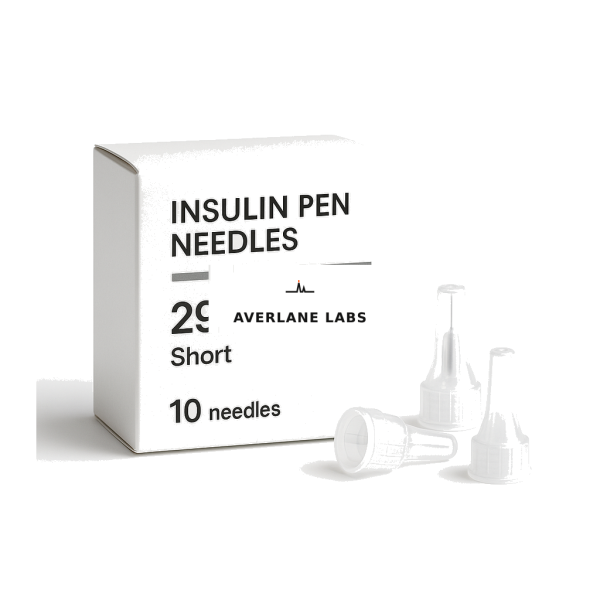
Reconstitution and bench supplies researchers pair with Syn-ake 200mg vial
NOT FOR HUMAN CONSUMPTION
SYN-AKE refers to dipeptide diaminobutyroyl benzylamide diacetate, a topical cosmetic peptide best viewed as a cosmeceutical anti-wrinkle ingredient, not a proven medical substitute for botulinum toxin. It is marketed as a snake-venom-inspired biomimetic peptide, with the main claim being reduction of expression lines / dynamic wrinklesthrough a neurotransmitter-inhibiting mechanism. The strongest defensible claim is modest wrinkle-smoothing support in topical skincare, while broader “topical Botox” claims are overstated. Independent evidence exists, but it is still limited and far less robust than the marketing language suggests.
Additional benefits of SYN-AKE under investigation
| Benefit | Take-away |
|---|---|
| 1. Expression-wrinkle support | This is the main use case. SYN-AKE is primarily positioned for dynamic/expression lines rather than deep structural wrinkles. |
| 2. “Botox-like” cosmetic positioning | The peptide is widely marketed as a needle-free wrinkle relaxer, but this should be softened to “cosmetic smoothing support,” not true equivalence to botulinum toxin. |
| 3. Fast visible wrinkle reduction claims | Supplier materials emphasize relatively rapid wrinkle-appearance changes, but these claims come heavily from commercial development literature. |
| 4. Dynamic facial-line targeting | The proposed mechanism makes it more relevant to repetitive facial-movement lines than to static photoaging alone. |
| 5. Cosmetic anti-aging use in serums and creams | In practice, it is used as a formulation ingredient rather than a standalone therapy. |
| 6. Formulation-dependent performance | As with other topical peptides, actual effect likely depends heavily on vehicle, concentration, and delivery. |
| 7. Generally favorable cosmetic-use framing | Public-facing cosmetic references tend to present it as reasonably well tolerated in skincare use, though that is not the same as a large medical safety literature. |
| 8. Not a proven broad anti-aging therapy | The evidence supports a narrow cosmetic wrinkle-smoothing interpretation, not deep regeneration or systemic anti-aging claims. |
2. Molecular mechanism of action
2.1 Receptor pharmacodynamics
SYN-AKE does not act like a classic single-receptor drug. It is generally described as a synthetic peptide inspired by waglerin-1, a peptide from temple viper venom, and is marketed as a neurotransmitter-inhibiting peptide. Cosmetic references describe it as reducing muscular micro-contractions or modulating signaling at the superficial neuromuscular level, but this should be understood as a cosmetic mechanistic analogy, not as proof of true botulinum-like clinical activity.
2.2 Downstream biology
| Pathway / theme | Functional outcome | Context |
|---|---|---|
| Snake-venom biomimetic design | Expression-line smoothing rationale | Cosmetic anti-wrinkle use |
| Neurotransmitter-inhibiting signaling | Reduced facial micro-contraction proposed | Dynamic wrinkle context |
| Topical formulation delivery | Determines whether meaningful skin-level activity occurs | Product performance |
These mechanisms are plausible in cosmetic terms, but they do not establish that topical SYN-AKE reproduces injectable neuromodulator effects in any strong medical sense.
3. Pharmacokinetics
Route: topical.
The practical value of SYN-AKE depends almost entirely on topical formulation and skin delivery, not systemic pharmacology. Supplier guidance describes it as a water-miscible aqueous cosmetic ingredient incorporated into the aqueous phase of products, which reinforces that this is a formulation ingredient rather than a systemic therapeutic peptide. As with similar anti-wrinkle peptides, the main real-world question is whether enough active peptide reaches the relevant superficial targets to produce noticeable benefit.
4. Pre-clinical and clinical evidence
4.1 Wrinkle / expression-line use
This is the best-supported niche, but the evidence base is still modest. Commercial and review materials consistently frame SYN-AKE as useful for expression lines, laughter lines, crow’s feet, and forehead wrinkles, but the public literature appears more dependent on supplier-linked evidence and broader cosmetic peptide reviews than on a large set of independent randomized trials.
4.2 Standalone evidence quality
This is the main limitation. I did not find a strong body of large, modern, independent clinical trials specifically establishing SYN-AKE as a robust anti-wrinkle therapy. The overall evidence looks more like plausible cosmetic benefit with modest support than a deeply validated active. That means the fairest summary is: reasonable cosmeceutical wrinkle-support ingredient, but not strongly proven at a drug-like level.
4.3 Comparison with other cosmetic peptides
The broader peptide-cosmetic literature places SYN-AKE in the same general family as other “Botox-alternative” peptides, but also makes clear that the field as a whole suffers from heterogeneous methods, variable endpoints, and uneven evidence quality. So product-to-product extrapolation should be done carefully.
5. Emerging clinical interests
| Field | Rationale | Status |
|---|---|---|
| Topical anti-wrinkle skincare | Main commercial use | Supportive but modest |
| Dynamic expression lines | “Neurotransmitter peptide” rationale | Plausible, formulation-dependent |
| Needle-free wrinkle reduction | Cosmetic positioning | Overstated if compared directly to Botox |
| Broad anti-aging / regenerative claims | Marketing extension | Not established |
6. Safety and tolerability
For topical cosmetic use, SYN-AKE is generally presented in skincare references as reasonably well tolerated, with irritation being the more plausible practical issue rather than major systemic toxicity. But the available public evidence is much more cosmetic-industry and ingredient-reference style than a mature medical safety literature. So the best framing is apparently acceptable for routine cosmetic use, but not characterized like a drug.
7. Contraindications and cautions
Use extra caution with:
- “Botox in a bottle” claims, because the evidence does not support real equivalence to injectable botulinum toxin.
- Assuming all SYN-AKE products work the same, because formulation and delivery likely matter a lot.
- Replacing proven dermatologic procedures with SYN-AKE when someone wants major wrinkle reduction, because expected effects are much milder.
- Treating cosmetic supplier literature as equivalent to independent clinical proof, because much of the strong language comes from commercial sources.
8. Comparative practical matrix
| Feature | SYN-AKE |
|---|---|
| Main strength | Topical cosmetic expression-line peptide |
| Best-supported use case | Mild wrinkle / dynamic-line appearance support |
| Clinical evidence depth | Limited and uneven |
| Core limitation | Heavy marketing, limited independent robust trials |
| Main mechanism | Snake-venom-inspired neurotransmitter-inhibiting rationale |
| Short-term topical tolerability | Generally acceptable in cosmetic use |
| Main safety concern | More about overclaiming and irritation than known major toxicity |
| Best practical framing | Cosmeceutical wrinkle-support ingredient, not a Botox replacement |
9. Regulatory landscape
SYN-AKE is best understood as a cosmetic ingredient, not an approved anti-wrinkle drug. Its strongest defensible positioning is as a topical cosmeceutical peptide aimed at expression-line appearance, with supportive but limited evidence and substantial commercial overstatement around the “venom-like” / “Botox-like” story.
10. Future directions
The most useful future work would be:
- better independent randomized trials for SYN-AKE alone,
- clearer dose- and vehicle-specific comparisons,
- stronger evidence on skin penetration and target engagement,
- and head-to-head comparisons with other topical wrinkle peptides like Argireline and SNAP-type peptides. These are the main gaps implied by the current literature.
Best balanced summary
SYN-AKE is best viewed as a topical cosmetic peptide with plausible and probably modest benefits for expression-line smoothing. Its biomimetic “snake venom” mechanism is an interesting cosmetic concept, but the evidence is not strong enough to support “topical Botox” claims. The ingredient is better framed as a reasonable cosmeceutical wrinkle-support active than as a proven medical anti-aging treatment.
Selected references
- Paula’s Choice ingredient review, useful cautious summary of SYN-AKE as a neurotransmitter-inhibiting peptide and why “Botox-like” claims are exaggerated.
- DSM-Firmenich SYN-AKE product page, best direct source for how the manufacturer positions SYN-AKE and the expression-line claim.
- 2025 review of cosmetic peptides, helpful broader evidence-quality context for peptide cosmeceuticals, including the variability and limitations of efficacy data.
- Pentapharm / DSM study sheet, important historical supplier-linked source for the waglerin-1 biomimetic origin story and claimed wrinkle effects.
Researcher reviews
No reviews yet for this lot line. Verified purchasers can leave the first one.
Reviews
There are no reviews yet.