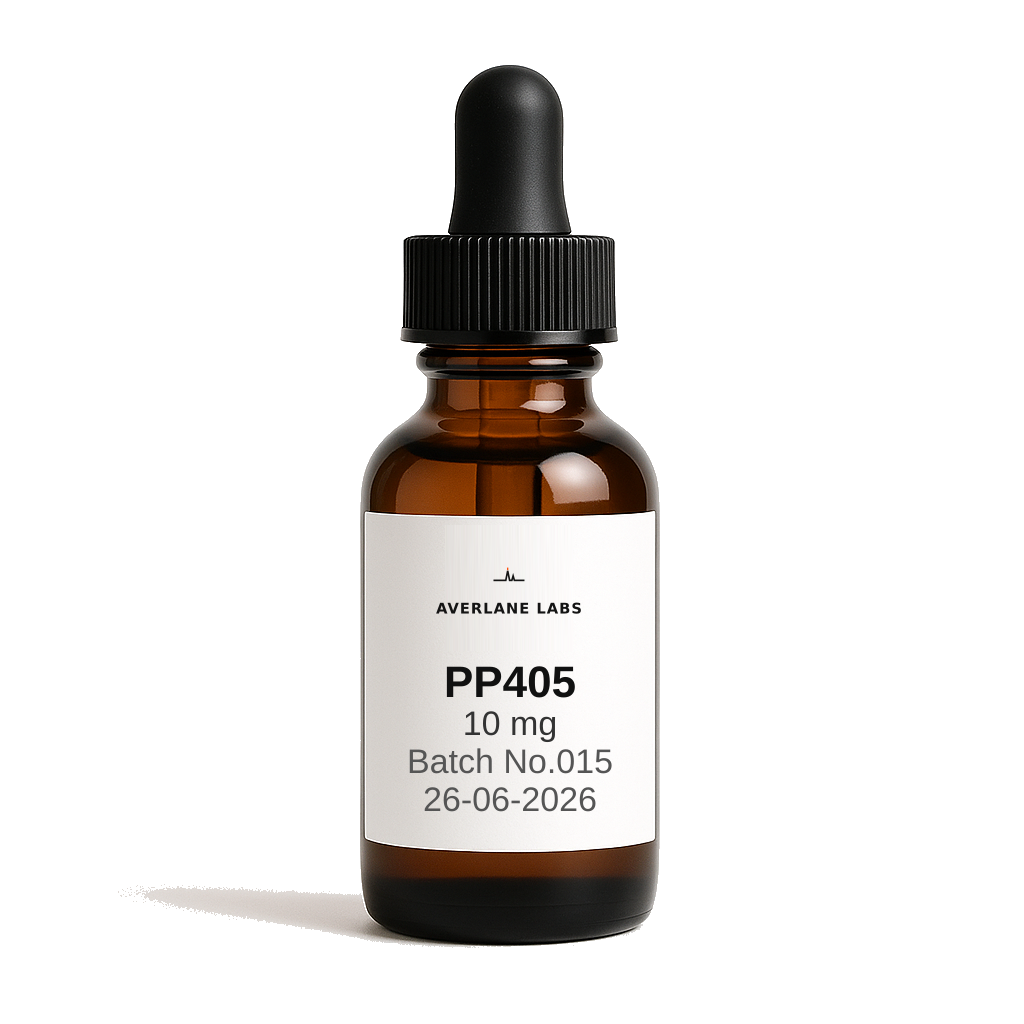
PP405 10mg vial
Certificate of Analysis available on request for the current lot.
Complete the setup
Reconstitution and bench supplies researchers pair with PP405 10mg vial
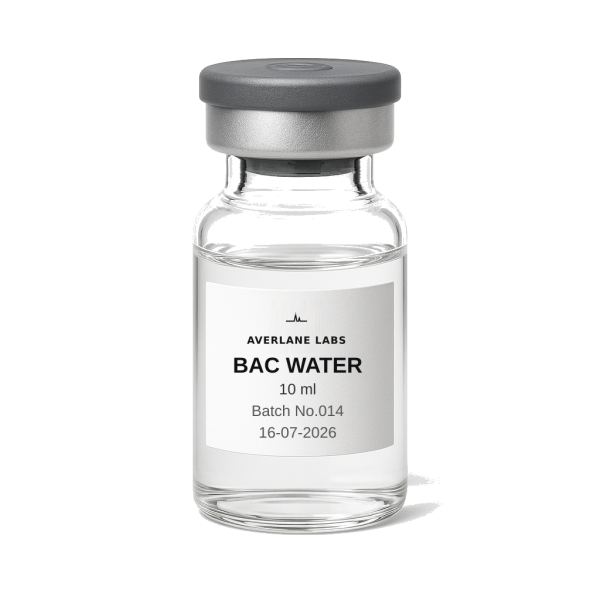
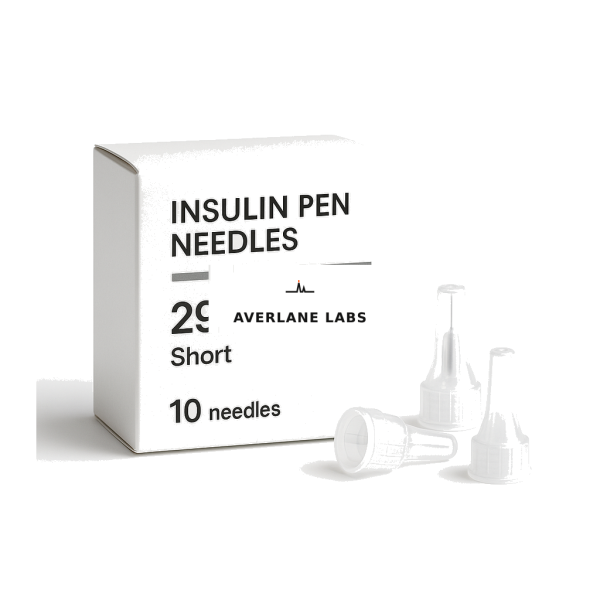
NOT FOR HUMAN CONSUMPTION
PP405 is best viewed as an investigational topical small-molecule hair-regeneration therapy, not a proven approved treatment. Its core idea is different from finasteride or minoxidil: it is being developed to reactivate dormant hair follicle stem cells by altering follicle-cell metabolism rather than by blocking androgens or directly prolonging the hair cycle. The strongest current evidence is early clinical plus strong translational/preclinical work in androgenetic alopecia (AGA), with the program now in Phase 2 clinical development. The results so far are promising but still preliminary.
Additional benefits of PP405 under investigation
| Benefit | Take-away |
|---|---|
| 1. Androgenetic alopecia treatment | This is the main use case. PP405 is being developed for AGA in men and women as a regenerative hair-growth therapy. |
| 2. Dormant follicle reactivation | Its main scientific appeal is the claim that it may reactivate follicles that are still biologically present but functionally dormant. |
| 3. Stem-cell activation | Phase 1 and ex vivo data presented by Pelage indicate activation of human hair follicle stem-cell biology rather than simple cosmetic thickening alone. |
| 4. Non-hormonal mechanism | PP405 is positioned as a metabolic/stem-cell therapy rather than an androgen-blocking drug, which makes it mechanistically distinct from finasteride. |
| 5. Potential use in more advanced hair loss | Company-reported Phase 2a data suggest some men with more advanced loss had notable density gains, but this is still early and subset-based. |
| 6. Topical convenience | It is being developed as a non-invasive topical treatment, which is a practical advantage if efficacy holds up. |
| 7. Favorable early safety/PK profile | Early trials reported good tolerability and no detected systemic absorption in blood. |
| 8. Not a proven market-ready hair-loss cure | The program is still investigational and has not yet become an approved standard therapy. |
2. Molecular mechanism of action
2.1 Receptor pharmacodynamics
PP405 does not appear to be a classic hormone-targeting hair-loss drug. Pelage describes it as acting through a metabolic switch in hair follicle stem cells, and related academic work points to inhibition of pyruvate oxidation as the key biologic strategy for activating hair follicle stem cells and stimulating entry into a growth program. So the practical pharmacology is better described as metabolic reactivation of follicle stem cells rather than receptor-selective endocrine pharmacology.
2.2 Downstream biology
| Pathway / theme | Functional outcome | Context |
|---|---|---|
| Inhibition of pyruvate oxidation | Stem-cell activation and hair-cycle stimulation | Hair follicle metabolism |
| Follicle stem-cell reactivation | Restart of dormant growth programs | AGA / regenerative hair biology |
| Non-hormonal follicle targeting | Potential growth without androgen suppression | Hair-loss therapeutics framing |
These mechanisms are biologically compelling, but they still do not by themselves prove strong clinical efficacy.
3. Pharmacokinetics
Route: topical.
The practical development story for PP405 depends heavily on local scalp activity with minimal systemic exposure. In both company-reported Phase 1 and Phase 2a results, PP405 was described as well tolerated and with no systemic absorption detected in blood, which is an important early safety/PK signal for a topical hair-loss therapy. But this remains early-stage clinical development, not a mature long-term PK/safety database.
4. Pre-clinical and clinical evidence
4.1 Preclinical / translational evidence
This is a strong part of the story. Pelage cites ex vivo human scalp-skin work and related academic publications showing that metabolic manipulation of follicle stem cells can stimulate hair-cycle activation. That gives PP405 a more serious biologic basis than a purely cosmetic claim.
4.2 Phase 1
The company reported that 0.05% topical PP405 used daily for seven days was safe and tolerable in its first-in-human study and supported markers consistent with early hair-regeneration biology. This is encouraging, but Phase 1 is mostly about safety and proof of mechanism, not proof of robust clinical regrowth.
4.3 Phase 2a
This is the most important current human evidence. Pelage reported that its randomized controlled Phase 2a trial enrolled 78 men and women with androgenetic alopecia, met its primary safety and secondary PK endpoints, and showed encouraging efficacy signals, including a subset with meaningful hair-density gains. Still, these are company-reported early-phase results, not yet the same as a fully published, definitive pivotal dataset.
4.4 Current development status
As of early 2026, Pelage continues to describe PP405 as being in Phase 2 clinical trials for androgenetic alopecia. That means it is further along than many speculative peptide or cosmetic products, but it is still not approved.
5. Emerging clinical interests
| Field | Rationale | Status |
|---|---|---|
| Androgenetic alopecia | Main development target | Active clinical development, Phase 2 |
| Regenerative hair restoration | Stem-cell reactivation rather than simple maintenance | Promising, still investigational |
| More advanced follicle dormancy states | Possible effect in previously low-activity follicles | Early and subset-based |
6. Safety and tolerability
The early safety picture is encouraging. Phase 1 and Phase 2a company reports describe PP405 as well tolerated, with no adverse events highlighted as major safety signals and no detected systemic absorption. But the right framing is still promising early tolerability, not fully characterized long-term safety.
7. Contraindications and cautions
Use extra caution with:
- treating PP405 as a proven hair-regrowth drug, because it is still investigational.
- assuming early company-reported Phase 2a results guarantee final clinical success, because many promising early hair-loss programs do not ultimately reach approval. This is an inference from standard drug-development risk, supported here by the fact that PP405 remains in Phase 2.
- calling it a cure for baldness, because the current evidence supports promise, not definitive cure-level proof.
- replacing established options solely because PP405 sounds more regenerative, because approved therapies still have much stronger real-world evidence today. The comparison to established options is a reasoned inference; PP405 itself remains investigational.
8. Comparative practical matrix
| Feature | PP405 |
|---|---|
| Main strength | Investigational regenerative hair-loss therapy |
| Best-supported use case | Androgenetic alopecia |
| Clinical evidence depth | Early but meaningful |
| Core limitation | Still in clinical trials; no approval yet |
| Main mechanism | Metabolic reactivation of dormant hair follicle stem cells |
| Delivery | Topical |
| Short-term tolerability | Encouraging |
| Best practical framing | Promising clinical-stage hair-regeneration drug candidate |
9. Regulatory landscape
PP405 is best understood as a clinical-stage investigational drug candidate, not an approved hair-loss treatment. The current public record supports that it is in Phase 2 development for AGA and that the company is continuing to advance the program, but there is no approval yet.
10. Future directions
The most useful next steps would be:
- larger later-stage randomized trials,
- clearer data on durability of regrowth,
- better understanding of which patients respond best,
- and head-to-head practical positioning relative to minoxidil, finasteride, and other emerging AGA therapies. These are the main gaps implied by the current Phase 1/2 status.
Best balanced summary
PP405 is best viewed as a promising investigational topical hair-regeneration drug designed to reactivate dormant hair follicle stem cells through metabolic modulation. Its mechanism is novel and biologically credible, and its early clinical results in androgenetic alopecia are encouraging, with favorable short-term safety and no detected systemic absorption. But it is still in Phase 2 development, so it should be framed as an exciting emerging therapy rather than a proven approved treatment.
Selected references
- Pelage Pharmaceuticals Phase 2a press release, best current source for the 78-patient randomized Phase 2a safety/PK and early efficacy summary.
- ClinicalTrials.gov NCT06393452, best source for official ongoing Phase 2 trial status.
- Pelage AAD 2024 presentation release, best source for Phase 1 stem-cell activation and ex vivo translational framing.
- Pelage corporate overview / press releases, best source for current company description of mechanism and 2026 Phase 2 status.
- Recent 2025 review of hair-loss drug development, useful context placing PP405 among emerging regenerative approaches
Researcher reviews
No reviews yet for this lot line. Verified purchasers can leave the first one.
Reviews
There are no reviews yet.