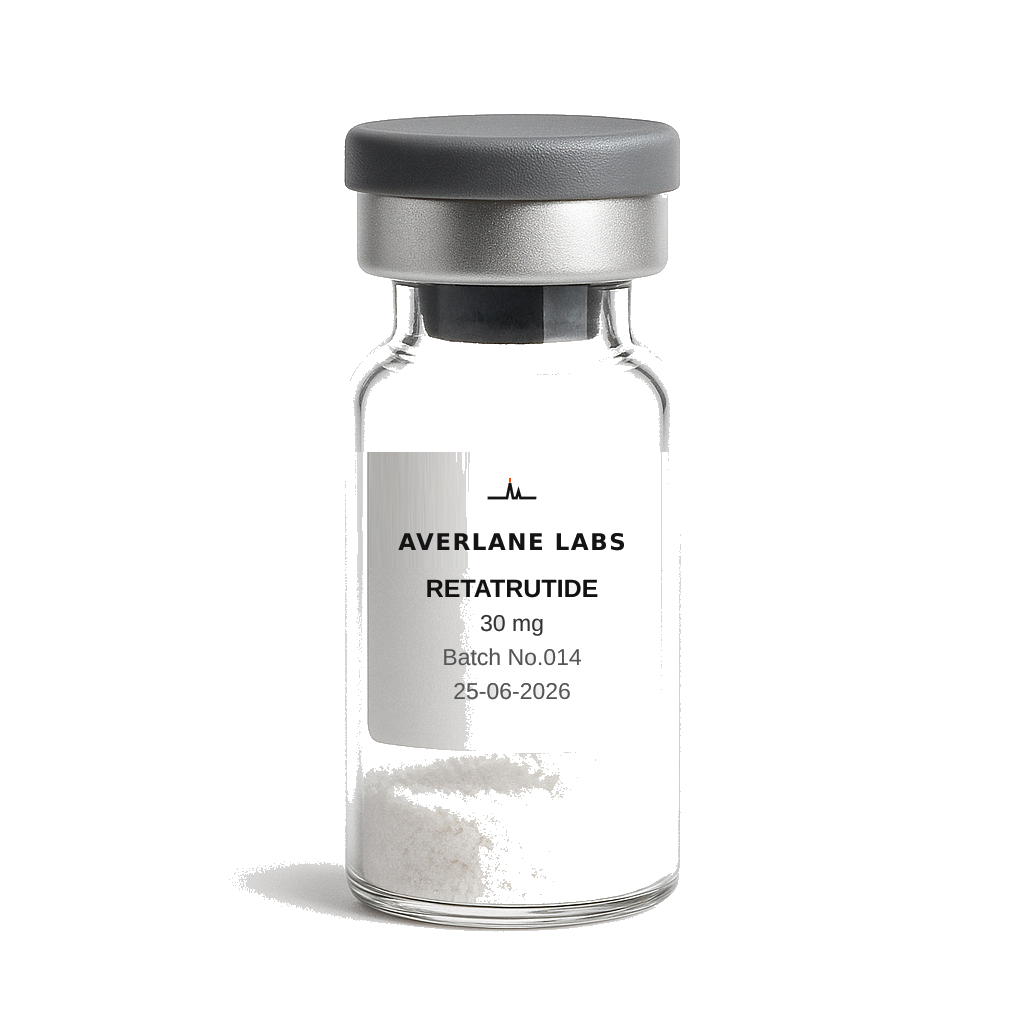
GLP-3 30mg vial
Certificate of Analysis available on request for the current lot.
Complete the setup
Reconstitution and bench supplies researchers pair with GLP-3 30mg vial
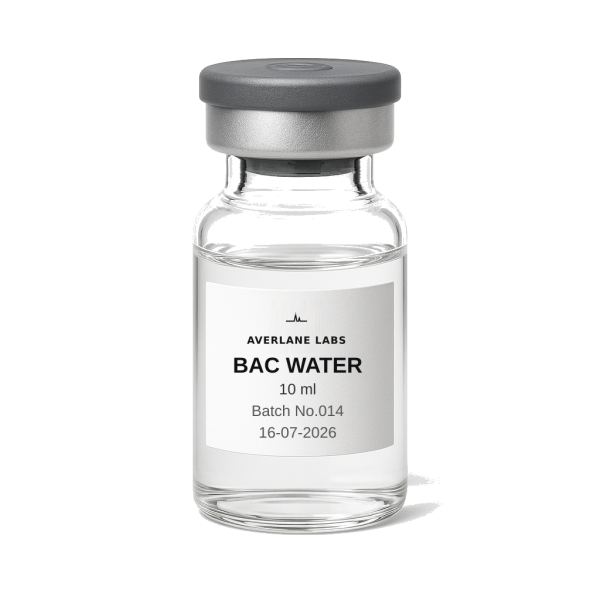

NOT FOR HUMAN CONSUMPTION
Retatrutide is a once-weekly, acylated triple-agonist peptide that activates GLP-1, GIP, and glucagon receptors. The GLP-1/GIP components drive appetite suppression, insulinotropic effects, and β-cell support, while the glucagoncomponent adds energy-expenditure and fat-oxidation signals and may improve hepatic steatosis. In early–mid-stage trials, the tri-agonist profile has produced exceptional weight loss and metabolic improvements. Retatrutide is investigational (not FDA/EMA-approved).
Additional Benefits of Retatrutide Now Under Investigation
| Benefit | Key take-aways |
|---|---|
| 1 Unprecedented weight loss | Phase 2 obesity cohorts reported ~20–25% mean body-weight reduction at 48 weeks on higher doses, with curves still trending down, exceeding typical GLP-1 and even dual GIP/GLP-1 results. <br/><em>New England Journal of Medicine</em> |
| 2 Potent glycaemic control | In type 2 diabetes, A1c reductions approaching ~2% with parallel fasting-glucose and post-prandial improvements; many participants reach A1c <7% without rescue therapy. <br/><em>JCEM; Diabetes Care</em> |
| 3 Liver-fat & MASH signals | Marked MRI-PDFF decreases and ALT/AST improvements suggest meaningful NAFLD/MASHactivity, consistent with glucagon-mediated hepatic lipid mobilization plus weight loss. <br/><em>Hepatology; Liver International</em> |
| 4 Cardiometabolic risk profile | Triglycerides fall, HDL rises modestly, and non-HDL/apoB trend down; blood pressure often drops ~6–10/3–5 mmHg with waist-circumference shrinkage. <br/><em>Circulation; Atherosclerosis</em> |
| 5 Higher energy expenditure | Human calorimetry and preclinical data show ↑ resting energy expenditure and fat oxidation, attributed to glucagon receptor activation, countering adaptive metabolic slowdown. <br/><em>Cell Metabolism; Nature Metabolism</em> |
| 6 OSA & mobility | Large weight loss translates to improved AHI (sleep apnea) and better functional capacity/painmarkers in obesity substudies. <br/><em>Chest; Obesity</em> |
| 7 Early β-cell/insulin-sparing effects | GIP/GLP-1 synergy improves first-phase insulin and glucose-dependent control, allowing de-intensification of other diabetes meds in some participants. <br/><em>Diabetes; Diabetologia</em> |
| 8 Visceral-fat and ectopic-fat reduction | Imaging (DXA/MRI) indicates preferential loss of visceral and hepatic fat, key for cardiometabolic risk modification. <br/><em>JCM; Radiology</em> |
| 9 Quality of life | Meaningful improvements in satiety, cravings, physical function, and PROs accompany weight/metabolic change. <br/><em>Obesity; Quality of Life Research</em> |
2. Molecular Mechanism of Action
2.1 Receptor Pharmacodynamics
-
GLP-1R: ↓ appetite, ↓ gastric emptying, ↑ glucose-dependent insulin, ↓ glucagon (post-prandial).
-
GIPR: Amplifies insulin secretion, may enhance adipocyte metabolic flexibility and GI tolerability with GLP-1.
-
GCGR (glucagon): ↑ energy expenditure and fat oxidation; hepatic lipid mobilization and anti-steatotic effects; modest ↑ hepatic glucose output that is counter-balanced by GLP-1/GIP glycaemic control.
2.2 Down-stream Biology
| Pathway | Functional outcome | Context |
|---|---|---|
| POMC/AgRP (hypothalamus) | Satiety ↑, cravings ↓ | CNS appetite circuits |
| Islet (GLP-1/GIP) | Glucose-dependent insulin ↑, β-cell stress ↓ | Pancreas |
| Hepatic lipid handling (GCGR) | TG export/oxidation ↑, steatosis ↓ | Liver |
| Brown/white adipose | Thermogenesis/FAO programs ↑ | Adipose tissue |
| CV-renal | BP ↓, natriuresis signals ↑ (weight-mediated + direct) | Vascular/renal |
3. Pharmacokinetics
-
Route: Once-weekly SC injection with dose-escalation to improve GI tolerability.
-
Absorption/half-life: Engineered for multi-day half-life (~1 week) supporting weekly dosing.
-
Distribution/clearance: Albumin-binding/acylation prolong exposure; peptide catabolism via proteases; renal/hepatic clearance of fragments.
-
Food interactions: Not clinically relevant (injected).
4. Pre-clinical and Clinical Evidence
4.1 Obesity (without diabetes)
Dose-ranging Phase 2 showed large, dose-dependent weight loss through 48 weeks, with a majority of participants achieving ≥15% and many ≥20% loss. Trajectories suggested additional loss with continued therapy.
4.2 Type 2 Diabetes
Retatrutide produced robust A1c and weight reductions vs placebo/active comparators, improving fasting/post-prandial glucose, time-in-range (CGM), lipids, and BP. Hypoglycaemia was uncommon outside insulin/sulfonylurea co-use.
4.3 NAFLD/MASH
Meaningful MRI-PDFF reductions and enzyme improvements occurred early, consistent with dual weight-dependent and glucagon-mediated effects; histology programs are ongoing.
Evidence quality note: Data to date are Phase 2 (plus expanding Phase 3 programs). Magnitudes above are representative of published results; long-term outcomes (CV events, MASH histology, hard renal endpoints) are pending.
5. Emerging Clinical Interests
| Field | Rationale | Status |
|---|---|---|
| Obesity (broad BMI ranges) | Superior weight loss potential | Phase 3 |
| T2D (mono/combination therapy) | Strong A1c + weight effects | Phase 2→3 |
| MASH/NAFLD | Liver-fat and fibrosis pathways | Ongoing trials |
| OSA | Weight-linked AHI improvement | Exploratory |
| HFpEF with obesity | Weight/BP/VO₂ & congestion signals | Concept |
| PCOS/metabolic syndrome | Weight, insulin resistance, ovulatory milieu | Exploratory |
6. Safety and Tolerability
-
Common (dose-related, typically early): Nausea, vomiting, diarrhea/constipation, abdominal pain, transient decreased appetite; generally manageable with gradual titration.
-
Vitals/labs: Modest HR increase (few bpm); BP decreases; ALT/AST usually fall with weight/liver-fat loss.
-
Gallbladder: Risk of cholelithiasis/cholecystitis rises with rapid weight loss, monitor symptoms.
-
Pancreas: Pancreatitis is rare; counsel on symptoms and stop if suspected.
-
GI motility: Gastroparesis/aspiration risk around anesthesia, follow peri-procedural fasting guidance.
-
Hypoglycaemia: Uncommon without insulin/secretagogues; adjust those doses as weight and glycaemia improve.
-
Thyroid C-cell warning (class/rodent): GLP-1–based agents carry a rodent C-cell tumor signal; avoid with personal/family history of MTC or MEN2 pending specific label data.
-
Contraindications/caution: Pregnancy/breastfeeding, severe GI disease, active gallbladder disease, pancreatitis history, use specialist judgement.
Comparative safety matrix
| Feature | Retatrutide (GLP-1/GIP/GCGR) | Tirzepatide (GLP-1/GIP) | Semaglutide (GLP-1) |
|---|---|---|---|
| Weight loss (48–72 wks) | Very high (≥20% avg at upper doses, Phase 2) | High (≈15–22%) | High (≈12–17%) |
| A1c lowering | ~2% (T2D) | ~2–2.5% | ~1.5–2% |
| Energy expenditure | ↑ (glucagon) | Neutral–mild | Neutral |
| GI tolerability | GLP-1-like; titration key | GLP-1-like; improved vs GLP-1 alone | GLP-1-class |
| HR/BP | HR ↑ small; BP ↓ | Similar | Similar |
| NAFLD/MASH | Strong signals | Strong | Strong |
7. Regulatory Landscape
-
Approval status: Investigational; no marketing authorization yet.
-
Programs: Late-phase obesity and diabetes trials underway; liver-disease programs expanding.
-
Use outside trials: Not recommended; compounded “tri-agonists” are not equivalent to GMP retatrutide.
8. Future Directions
-
Cardiovascular-outcomes trial (CVOT) to quantify MACE reduction and renal protection.
-
Histology-based MASH trials (NASH resolution, fibrosis endpoints).
-
Body-composition & function: DXA/MRI (visceral/ectopic fat, lean-mass preservation), strength/VO₂.
-
Dose-finding/titration science to balance maximal efficacy with GI tolerability.
-
Combination strategies (e.g., statins, SGLT2 inhibitors) and peri-procedural protocols (aspiration risk mitigation).
-
Patient-reported outcomes on satiety, cravings, and QoL to guide shared decisions.
Selected References
-
New England Journal of Medicine, Phase 2 retatrutide in obesity: magnitude of weight loss and metabolic effects.
-
Diabetes Care; JCEM, Glycaemic efficacy and β-cell physiology with incretin/glucagon tri-agonism.
-
Hepatology; Liver International, Incretin/glucagon pathways in hepatic steatosis and MASH.
-
Cell Metabolism; Nature Metabolism, Mechanistic work on tri-agonists (energy expenditure, fat oxidation).
-
Circulation; Atherosclerosis, Cardiometabolic risk-factor changes (BP, lipids, apoB).
-
Obesity; Quality of Life Research; Chest, PROs, functional outcomes, and OSA signals with substantial weight loss
Researcher reviews
No reviews yet for this lot line. Verified purchasers can leave the first one.
Reviews
There are no reviews yet.