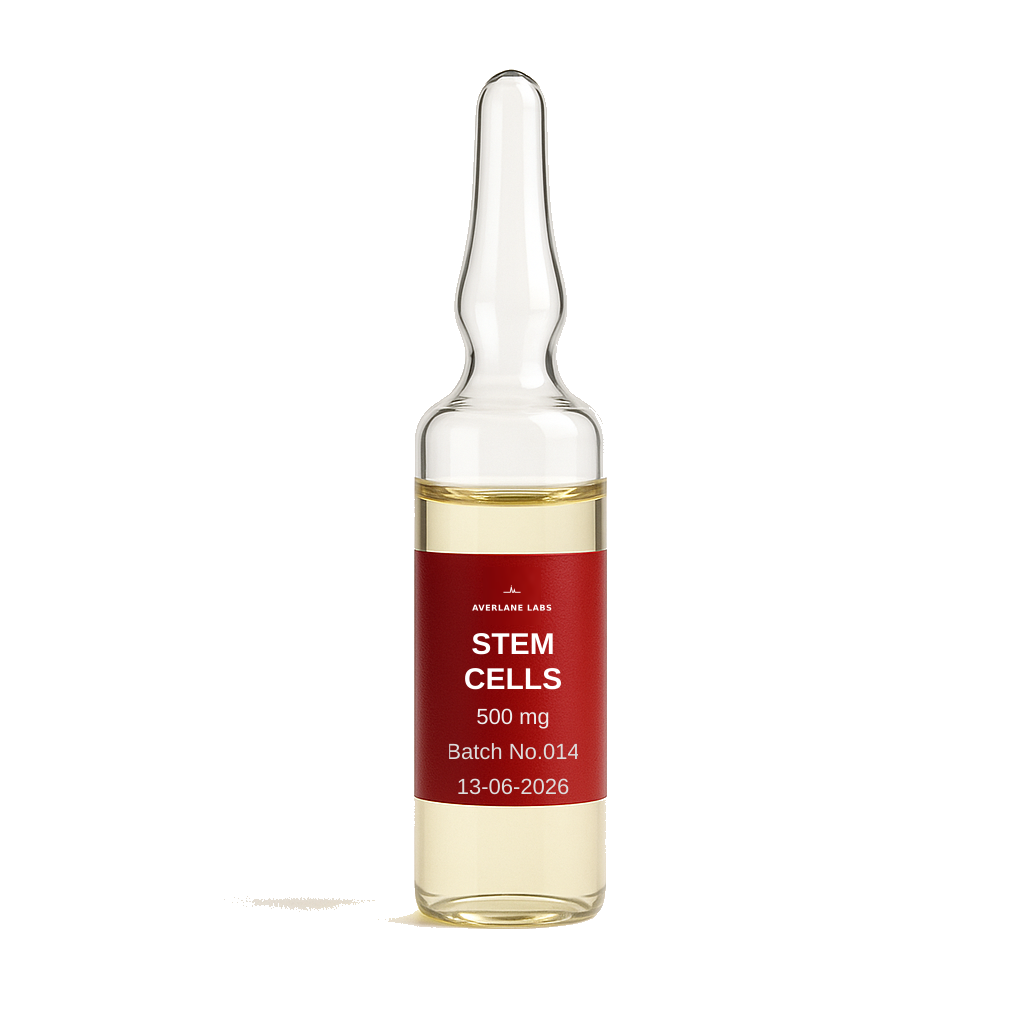
Embryonic stem cells ampoule
Certificate of Analysis available on request for the current lot.
Complete the setup
Reconstitution and bench supplies researchers pair with Embryonic stem cells ampoule
NOT FOR HUMAN CONSUMPTION
Embryonic stem cells (ESCs) are pluripotent cells derived from the inner cell mass of pre-implantation blastocysts. They self-renew indefinitely and can differentiate into all three germ layers (ectoderm, mesoderm, endoderm). Their biology is governed by a core pluripotency network (OCT4, SOX2, NANOG) and signaling inputs (Activin/Nodal–TGF-β, WNT/β-catenin, FGF–ERK). hESCs are the workhorse starting material for manufacturing lineage-specific cell therapies and disease models; they remain investigational in most indications and are tightly regulated due to ethical, safety, and immunologic considerations.
Additional Benefits of ESCs Now Under Investigation
| Benefit | Key take-aways |
|---|---|
| 1 Retinal repair (RPE/photoreceptors) | hESC-derived retinal pigment epithelium (RPE) monolayers can rescue photoreceptor functionand stabilize/ improve vision in geographic atrophy/AMD and Stargardt disease in early trials; survival hinges on polarized, GMP-grade RPE and immune control. <br/><em>Ophthalmology; Stem Cell Reports</em> |
| 2 Pancreatic islet replacement (T1D/T2D) | hESC-derived pancreatic progenitors/β cells restore insulin production and improve C-peptide/glucose control in early clinical studies; ongoing work optimizes engraftment, maturation, and immune protection (encapsulation or immune editing). <br/><em>Diabetes; Cell Stem Cell</em> |
| 3 Spinal cord injury & myelination | Oligodendrocyte progenitors from hESCs remyelinate axons and improve motor/sensory scores in subacute SCI cohorts; dosing, lesion timing, and rehab pairing are critical. <br/><em>Lancet Neurology; Nature Medicine</em> |
| 4 Cardiac regeneration | hESC-derived cardiomyocytes/epicardial cells in patches or injections augment LVEF, reduce scar, and improve wall motion in large animals and first-in-human pilots; arrhythmia risk and vascularization remain key hurdles. <br/><em>Circulation; European Heart Journal</em> |
| 5 Dopaminergic neurons (Parkinson’s) | hESC-derived A9-like DA neurons show survival, striatal reinnervation, and motor benefitin primates; early human implant programs are underway with stereotactic delivery and controlled immunosuppression. <br/><em>Nature; Annals of Neurology</em> |
| 6 Hepatic tissue (metabolic disease) | hESC-hepatic progenitors/hepatocytes improve ammonia handling and albumin in liver-failure models; bioengineered scaffolds and portal/ectopic sites are being tested clinically. <br/><em>Hepatology; Science Translational Medicine</em> |
| 7 Cartilage/bone & musculoskeletal | hESC-chondroprogenitors form hyaline-like cartilage with good biomechanics in focal knee defects; osteogenic derivatives support spinal fusion in models. <br/><em>JBMR; Osteoarthritis & Cartilage</em> |
| 8 Immune-compatible “universal donor” cells | Gene-edited hESC lines (e.g., HLA-I/II knockout, HLA-E/G or CD47 overexpression) reduce allogeneic rejection, enabling off-the-shelf cells with lighter immunosuppression. <br/><em>Nature Biotechnology; Cell</em> |
| 9 Drug discovery & disease modeling | hESC-derived organoids (brain, liver, gut), and lineage cells provide human-relevant pharmacology, safety, and toxicity platforms, lowering late-stage attrition. <br/><em>Nature Reviews Drug Discovery; Cell Reports</em> |
2. Molecular Mechanism of Action
2.1 Pluripotency & lineage commitment
-
Core circuitry: OCT4–SOX2–NANOG maintain an open chromatin landscape (bivalent H3K4me3/H3K27me3) and TERT activity (long telomeres).
-
Fate cues:
-
Activin/Nodal–TGF-β → definitive endoderm (→ pancreatic, hepatic).
-
WNT + BMP inhibition → anterior neuroectoderm (→ retina, cortical neurons).
-
WNT + BMP → mesoderm (→ cardiac, hematopoietic).
-
-
Manufacturing levers: Small molecules and morphogens (e.g., CHIR99021, SB431542, retinoids) steer stage-specific protocols with release criteria (identity, purity, potency, karyotype).
2.2 Therapeutic modes of action
| Modality | Primary effect | Examples |
|---|---|---|
| Cell replacement | Durable integration and function | RPE for AMD; β cells for diabetes; DA neurons for PD |
| Paracrine/secretome | Trophic, immunomodulatory support | Cardiac/renal/hepatic progenitors |
| Tissue engineering | Cells + biomaterials/patches | Epicardial/cardiomyocyte patches; osteochondral plugs |
| Organoid/transplant | Mini-tissue physiology | Liver/bile duct, intestinal, retinal organoids |
3. Product Characteristics (in lieu of PK)
-
Dose/form: Single-cell suspensions, confluent monolayers (e.g., RPE), or tissue patches; cell doses typically 10⁵–10⁸ per administration.
-
Route/site: Subretinal, intramyocardial/epicardial, intrastriatal, intrathecal/intralesional, intraportal/ectopic.
-
Persistence: Intended long-term engraftment; tracking via imaging, donor DNA, or reporter assays.
-
Co-medications: Immunosuppression (e.g., tacrolimus/mycophenolate ± steroids) unless hypoimmunogenic edits/encapsulation are used.
-
Release testing: Identity (flow, qPCR), purity (residual pluripotent markers ↓), karyotype, viability, potency(assay-specific), sterility, endotoxin, adventitious agents.
4. Pre-clinical and Clinical Evidence
4.1 Ophthalmology (RPE/photoreceptors)
Multiple Phase 1/2 studies show anatomical integration and BCVA stabilization/improvement with acceptable safety when monolayers are used and immune control is adequate.
4.2 Endocrine (β cells)
hESC-derived pancreatic products demonstrate C-peptide restoration and reduced insulin needs in T1D; next steps emphasize autoimmunity shielding and full glucose responsiveness.
4.3 Neurology (SCI, PD)
Oligodendrocyte/neuronal derivatives yield myelination and motor gains in animals and early human cohorts; PD grafts seek physiologic dopamine release with minimal dyskinesia.
4.4 Cardiology
Cardiomyocyte/epicardial constructs improve LVEF and remodeling in large animals; human pilot data note ventricular arrhythmias as a manageable risk with maturation and delivery refinements.
Evidence quality note: Many signals are Phase 1/2 with surrogate endpoints (function scores, imaging). Long-term durability, standardized potency metrics, and comparators vs best available care remain active gaps.
5. Emerging Clinical Interests
| Field | Rationale | Status |
|---|---|---|
| Universal donor lines | Off-the-shelf access with minimal rejection | Gene-edited hESC banks |
| Immune-evasive encapsulation | Protect β cells/other grafts without systemic IS | Device/alginate platforms |
| In-situ maturation | Deliver progenitors that mature post-engraftment | Pancreas, heart, liver |
| Organoid grafting | Replace complex micro-tissues (bile duct, retina) | Early trials |
| Combination bioengineering | Cells + scaffolds + factors for mechanical/vascular support | Cardiac/orthopedic patches |
| Precision QC | Multi-omics release tests to predict tumorigenicity/efficacy | Standardization efforts |
6. Safety and Tolerability
-
Tumorigenicity: Residual pluripotent cells can form teratomas; stringent purification/potency assays and suicide/safety switches (e.g., inducible caspase-9) mitigate risk.
-
Ectopic tissue/overgrowth: Mis-patterned grafts can mal-differentiate; site-specific delivery and maturation control are essential.
-
Arrhythmia (cardiac): Immature cardiomyocytes may trigger ventricular arrhythmias; strategies include pre-maturation, pacing, and cell-type mixes.
-
Immunogenicity: Allogeneic cells risk rejection; options include systemic immunosuppression, HLA-matched banks, hypoimmunogenic edits, or encapsulation.
-
Genomic/epigenetic stability: Karyotypic changes and imprinting errors can accrue in culture, GMP lines require serial genome surveillance.
-
Procedure-related risks: Subretinal, intracerebral, intramyocardial procedures entail surgical/anesthesia risks.
-
Ethics/consent: Derivation requires informed consent from embryo donors; governance varies by region.
-
Infectious safety: Xeno-free media and robust testing minimize adventitious agent risks.
Comparative safety matrix
| Feature | ESC-derived therapies | iPSC-derived therapies | Adult MSC/progenitors |
|---|---|---|---|
| Pluripotency | Yes (high) | Yes (reprogrammed) | No (multipotent) |
| Tumor risk | Higher without purification | Similar concerns | Low (rare) |
| Immune match | Allogeneic (HLA banks/editing) | Autologous or allogeneic | Allogeneic/autologous |
| Manufacturing time | Banked, scalable | Autologous takes months | Weeks |
| Ethical issues | Embryo-derived | Fewer (donor somatic cells) | Fewer |
7. Regulatory Landscape
-
Classification: ATMPs / biologics (FDA/EMA).
-
Approvals: As of 2025, no widely approved ESC-derived therapeutic in the US/EU; several programs are in Phase 1/2 across ophthalmology, endocrinology, neurology, and cardiology.
-
Oversight: Derivation/use subject to embryo research laws, donor consent standards, GMP, and long-term follow-up requirements; trial governance includes tumorigenicity and genomic stability monitoring.
8. Future Directions
-
Hypoimmunogenic “stealth” lines (HLA deletion + HLA-E/G, CD47) to reduce rejection without heavy immunosuppression.
-
Maturation technologies (electrical/mechanical training, metabolic switching) to yield adult-like cardiomyocytes/neurons/β cells before implant.
-
Device integration (encapsulation, vascularized patches) for oxygenation and immune control.
-
Potency biomarkers that predict long-term function (e.g., β-cell glucose responsiveness, RPE polarity, neuronal subtype fidelity).
-
Global HLA-haplobanks for equitable access.
-
Head-to-head trials against standard care with hard endpoints (vision letters, insulin independence, LVEF/arrhythmia burden, disability scales).
Selected References
-
Nature; Cell; Science, Pluripotency networks (OCT4/SOX2/NANOG), lineage signaling, and gene-edited hypoimmunogenic ESCs.
-
Ophthalmology; Stem Cell Reports, hESC-RPE clinical trials in AMD/Stargardt; monolayer vs suspension outcomes.
-
Diabetes; Cell Stem Cell, hESC-derived pancreatic progenitors/β cells: differentiation, engraftment, and immune protection.
-
Lancet Neurology; Nature Medicine, Oligodendrocyte/neuronal derivatives in SCI and Parkinson’s.
-
Circulation; European Heart Journal, hESC-cardiomyocyte patches: efficacy, arrhythmia mitigation.
-
Hepatology; Science Translational Medicine, hESC-hepatic programs and bioengineering scaffolds.
-
Nature Biotechnology; Cell Reports, Manufacturing, QC (karyotype, imprinting), and tumorigenicity safeguards (suicide switches).
-
Nature Reviews Drug Discovery, Organoids and hESC-derived platforms for pharmacology and toxicity.
| EACH VIAL CONTAINS: | |
|---|---|
| Embryonic Stem Cells | 1250mg |
| Equiv to Stem Cell Extract | 250mg |
| Thiamine Hydrochloride | 300mg |
| Pyridoxine Hydrochloride | 300mg |
| Cobalamin | 30mg |
| Cystein | 0.5mg |
| Copper Peptide | 125mg |
| Glycine | 3mg |
| Proteins: | |
| Myosin | 22.5mg |
| Kinesin | 250mcg |
| Collagen | 50mg |
| Glutathione Tripeptide | 120mg |
| Amino Acids: | |
| L-Lysine | 3.5mg |
| L-Glutamine | 3mg |
| L-Arginine | 165mcg |
| L-Leucine | 2mg |
| L-Alanine | 1.5mg |
| L-Histadine | 143mcg |
| Minerals: | |
| Calcium | 15mg |
| Sodium | 1mg |
| Potassium | 250mcg |
| Iron | 1mg |
| Zinc | 1.35mg |
Researcher reviews
No reviews yet for this lot line. Verified purchasers can leave the first one.
Reviews
There are no reviews yet.