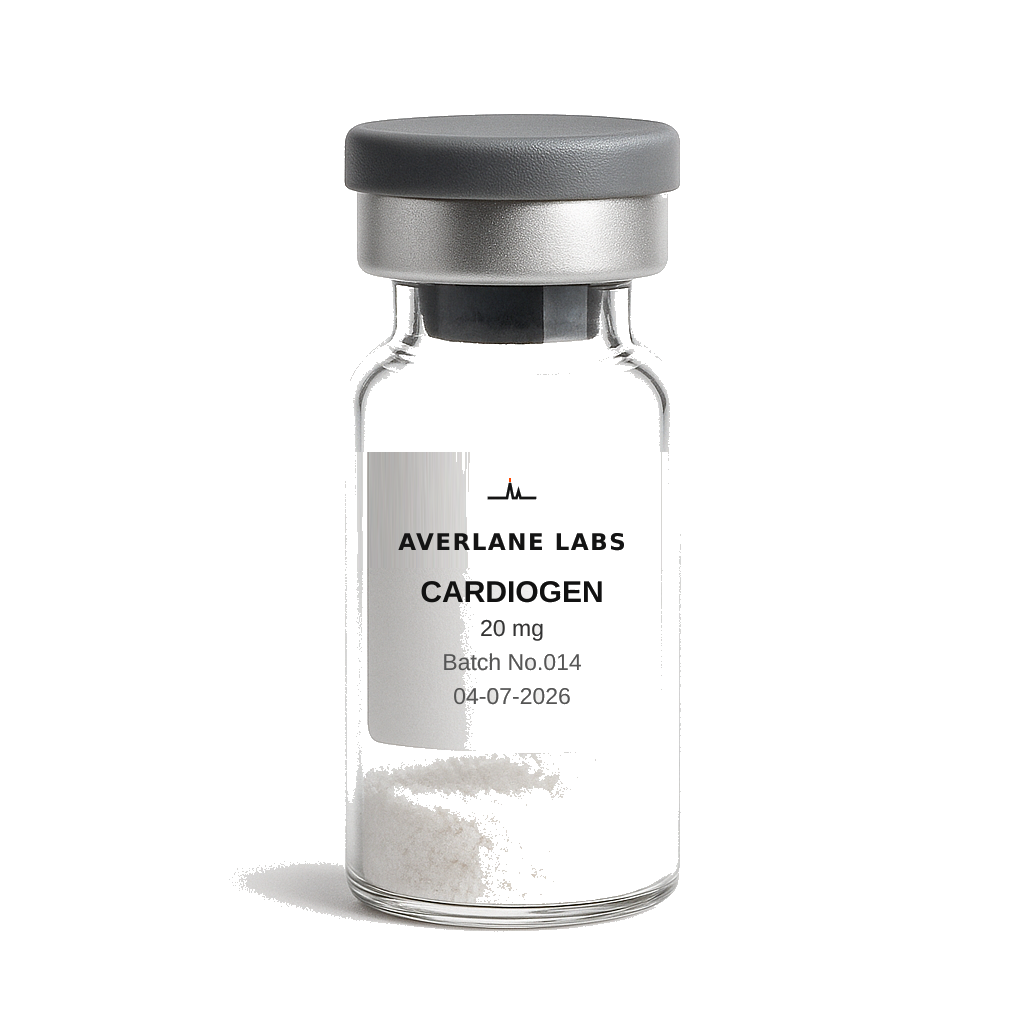
Cardiogen 20mg vial
Certificate of analysis
Lot AL-CARDIO-2631 · Purity 97.69% · Tested 2026-06-25
Complete the setup
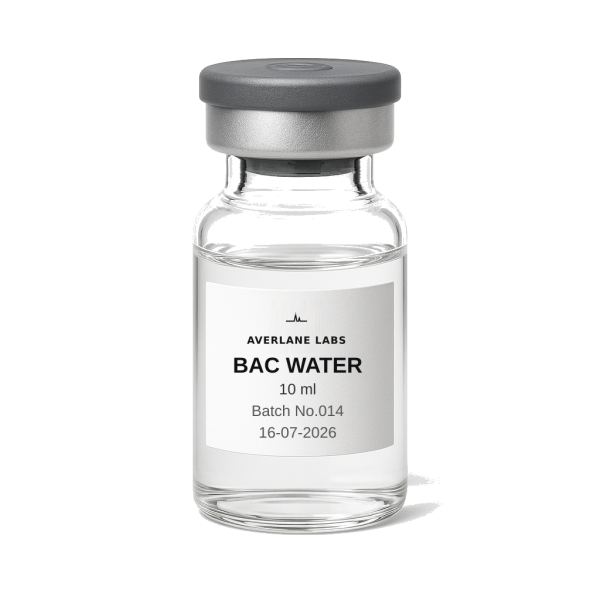
Reconstitution and bench supplies researchers pair with Cardiogen 20mg vial

NOT FOR HUMAN CONSUMPTION
Cardiogen is most commonly described in the peptide-bioregulator ecosystem as an ultrashort tetrapeptide with the sequence H-Ala-Glu-Asp-Arg-OH (AEDR), positioned as a cardiac tissue bioregulator.
Core concept
Cardiogen is not framed as a classic receptor agonist drug. It’s proposed to enter cells and influence gene expression / DNA-associated processes, with particular focus on cardiac repair/adaptation pathways (often via fibroblast/cardiomyocyte biology in models).
Regulatory status
As commonly sold in “bioregulator / research peptide” channels, Cardiogen is not an FDA/EMA-approved medicine(no drug-label-grade indications/safety/PK).
1) Additional benefits now under investigation (Cardiogen/AEDR-centered)
| BENEFIT | KEY TAKE-AWAYS |
|---|---|
| 1) Myocardial repair / cellular renewal signals | Described as supporting repair programs in cardiac tissue research; often discussed via fibroblast/tissue remodeling hypotheses. |
| 2) Anti-apoptotic / stress-adaptation themes | Bioregulator framework sources frequently frame effects around cell survival and stress response (mechanism remains incompletely established in humans). |
| 3) DNA processing / endonuclease modulation | Some descriptions report AEDR can modulate DNA hydrolysis/repair processes, possibly via interaction with enzymes rather than direct DNA binding. |
| 4) Mitochondrial / bioenergetics interest (secondary summaries) | Vendor summaries highlight mitochondrial bioenergetics/calcium homeostasis themes; treat as hypothesis-level unless linked to primary data. |
Evidence quality note: The most solidly citable material is mechanistic/review framing and biochemical interaction claims; robust, widely indexed human outcome RCTs (hard CV endpoints) for Cardiogen itself are not clearly established from the above sources.
2) Molecular mechanism of action
2.1 “Pharmacodynamics” framing (typical)
-
Intracellular/nuclear interaction paradigm: ultrashort peptides are proposed to enter nuclei/nucleoli and interact with DNA/nucleosome machinery, affecting transcription and DNA repair processes.
-
AEDR-specific DNA processing modulation: AEDR is described as influencing DNA hydrolysis via endonuclease systems (enzyme-mediated mechanism proposed).
2.2 Down-stream biology (conceptual map)
| DOMAIN | FUNCTIONAL OUTCOME (hypothesized/reported) | CONTEXT |
|---|---|---|
| Cardiac fibroblast / remodeling biology | repair/scar-formation signaling balance | preclinical/bioregulator framing |
| DNA hydrolysis/repair modulation | altered DNA processing in model systems | enzyme interaction hypothesis |
| Stress adaptation pathways | survival/repair programs | broad ultrashort peptide paradigm |
3) Pharmacokinetics (PK)
There is no authoritative drug-label PK for Cardiogen in common research/bioregulator commerce. As an unmodified tetrapeptide, systemic exposure would generally be expected to be route/formulation dependent and subject to rapid peptidase degradation, making formal PK/PD bridging critical for any clinical translation claims.
4) Pre-clinical and clinical evidence
4.1 Mechanistic / preclinical (stronger)
-
Reviews of peptide gene regulation describe ultrashort peptides (including AEDR) as capable of modulating DNA processing and gene expression pathways.
-
Secondary summaries describe effects on cardiac tissue repair biology (often emphasizing fibroblast targets).
4.2 Human clinical evidence (weaker / unclear)
From the retrieved sources here, high-quality, widely indexed human trials showing meaningful clinical outcomes (e.g., EF improvement in HF, post-MI remodeling endpoints, MACE reduction) are not clearly established for Cardiogen itself.
5) Emerging clinical interests
| FIELD | RATIONALE | STATUS |
|---|---|---|
| Cardiac repair / remodeling | fibroblast + repair signaling hypothesis | early mechanistic/preclinical; needs trials |
| “Cardiometabolic resilience” via stress biology | DNA/gene-regulation paradigm | conceptual; translation uncertain |
6) Safety and tolerability
High-certainty statement: Cardiogen in typical “research/bioregulator” channels does not come with an FDA/EMA-style safety label, so contraindications/interactions/monitoring are not defined to drug standards.
Practical risk drivers:
-
Identity/purity/sterility variability across suppliers (especially given sequence inconsistency in the market).
-
Immunologic/local reactions are possible with peptides; true rates unknown without regulated pharmacovigilance.
7) Regulatory landscape
-
Generally positioned as research / bioregulator material rather than an approved therapeutic with standardized indications.
8) Future directions (what would validate claims)
-
Sequence + GMP standardization (AEDR confirmed by MS/HPLC; impurities and stability defined).
-
Human PK/PD bridging (exposure, tissue distribution, biomarker engagement).
-
Controlled clinical trials in defined indications (post-MI remodeling, HF biomarkers/imaging endpoints), plus long-term safety datasets.
Selected references
-
AEDR definition and general Cardiogen description:
-
Peptide gene-expression / nuclear interaction framework (systematic review):
-
DNA hydrolysis modulation mention including AEDR among ultrashort peptides:
-
Marketplace inconsistency example (different “Cardiogen” sequence claimed)
Researcher reviews
No reviews yet for this lot line. Verified purchasers can leave the first one.
Reviews
There are no reviews yet.