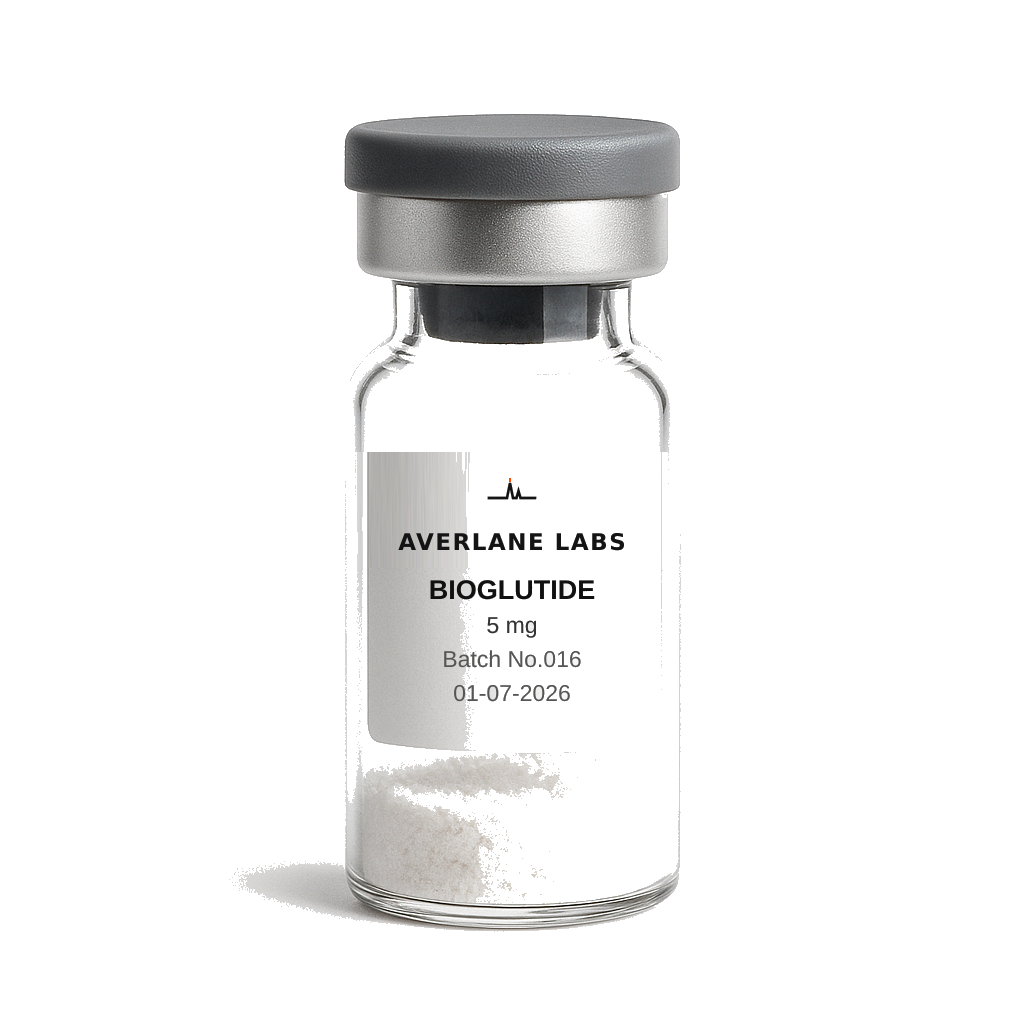
Bioglutide flacon 5mg
Certificate of Analysis available on request for the current lot.
Complete the setup
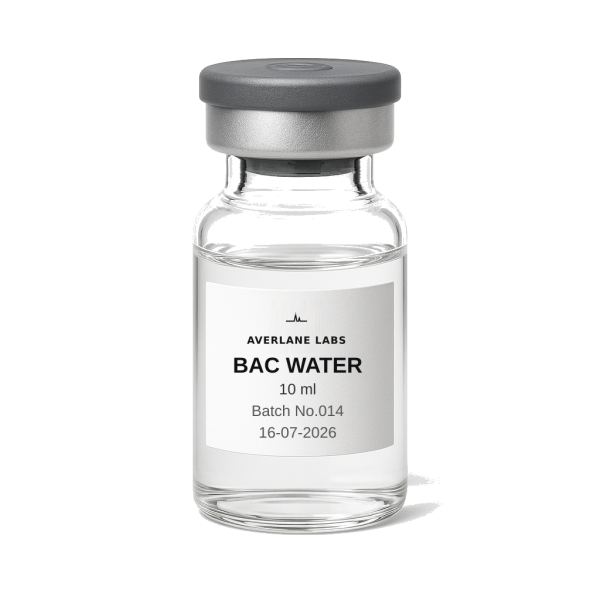
Reconstitution and bench supplies researchers pair with Bioglutide flacon 5mg

NOT FOR HUMAN CONSUMPTION
Bioglutide (NA-931) is positioned as a once-daily pill aiming to combine incretin satiety/glycaemic control (GLP-1, GIP), energy-expenditure and hepatic lipid effects (glucagon), and anabolism/lean-mass support (claimed IGF-1 receptor activity). If verified, the mix would theoretically pair deep appetite suppression with higher energy expenditure and better body-composition quality than GLP-1 monotherapy. Evidence confirming direct IGF-1 receptor agonism by a small molecule is sparse in the literature, so this aspect should be viewed as unproven pending peer-review.
Additional Benefits of Bioglutide Now Under Investigation
| Benefit | Key take-aways |
|---|---|
| 1 Oral, multi-pathway weight loss | Company-reported Phase 2 data (13 weeks) cite double-digit mean weight loss at higher doses, with placebo-adjusted reductions >10% in top arms. Independent, peer-reviewed confirmation is pending. |
| 2 Glycaemic control in T2D | Aims to deliver A1c reductions comparable to injectable incretins while being oral; formal peer-reviewed T2D results have not yet been published. |
| 3 Energy-expenditure boost (GCGR) | Glucagon receptor engagement is expected to raise resting energy expenditure and promote fat oxidation, potentially countering metabolic adaptation seen with weight loss. Human EE data for NA-931 have not been publicly vetted. |
| 4 Lean-mass preservation (IGF-axis) | By adding an IGF-1 component, NA-931 is pitched to preserve muscle during weight loss; direct evidence in humans has not been disclosed in peer-review. |
| 5 Liver fat & MASH signals | A quadruple profile could reduce MRI-PDFF and improve ALT/AST (weight loss + glucagon hepatolipid effects); trials in metabolic liver disease are referenced as ongoing/planned. |
| 6 Convenience & adherence | Oral dosing may improve uptake and persistence vs injectables for some patients, assuming tolerability is favorable. |
| 7 Combination potential | Company materials suggest add-on use with GLP-1/GIP injectables (e.g., semaglutide/tirzepatide) for extra weight loss; this is hypothesis-generating only. |
| 8 Cardiometabolic risk factors | Expectation (by mechanism/class): BP and triglyceride reductions, non-HDL/apoB improvements; formal datasets for NA-931 are not yet public. |
| 9 Patient-reported outcomes | Anticipated gains in satiety, cravings, physical function, data not yet peer-reviewed for NA-931. |
2. Molecular Mechanism of Action
2.1 Receptor pharmacodynamics (claimed)
-
GLP-1R: ↓ appetite, ↓ gastric emptying; glucose-dependent insulin↑, glucagon↓ post-meal.
-
GIPR: Potentiates insulin secretion; may improve adipocyte metabolic flexibility and GI tolerability with GLP-1.
-
GCGR (glucagon): ↑ energy expenditure and fat oxidation; mobilizes hepatic lipid with careful glycaemic counter-balance.
-
IGF-1R (claimed): Anabolic/anti-catabolic signaling (Akt–mTOR); preservation of lean mass. Note: Direct, selective small-molecule IGF-1R agonism is biologically unusual and currently unverified for NA-931 outside company statements.
2.2 Down-stream biology
| Pathway | Functional outcome | Context |
|---|---|---|
| POMC/AgRP (CNS) | Satiety ↑, cravings ↓ | Appetite circuits |
| Islet incretin signaling | Glucose-dependent insulin ↑ | Pancreas |
| Hepatic lipid handling (GCGR) | Fat oxidation ↑, steatosis ↓ | Liver |
| Akt–mTOR (IGF-axis) | Protein synthesis/lean mass support | Muscle (theoretical for NA-931) |
3. Pharmacokinetics
-
Formulation/Route: Oral tablet, once daily (company reports).
-
Half-life/Exposure: Not published in peer-review; dose-ranging has been presented in company communications.
-
Food effect/Absorption: Not disclosed in detail.
-
Drug–drug: No public interaction matrix yet.
4. Pre-clinical & Clinical Evidence (what’s public)
-
Phase 2 obesity (company-reported): ~13-week study with dose-dependent weight loss; a high-dose arm reportedly ~14–15% total body-weight reduction and ~13% placebo-adjusted, awaiting peer-review and full protocol transparency.
-
Development status: Communicated as moving toward Phase 2b/3 in obesity/T2D; registry and pipeline round-ups list NA-931 in mid-stage development.
Evidence quality note: To date, nearly all information comes from company press releases, industry trade coverage, or pipeline summaries, not peer-reviewed journals. Treat efficacy magnitudes and receptor claims as preliminary.
5. Emerging Clinical Interests
| Field | Rationale | Status |
|---|---|---|
| Chronic weight management | Oral option with multi-hormone pharmacology | Phase 2→2b/3 (company) |
| Type 2 diabetes | A1c + weight + potential metabolic flexibility | Planned/ongoing per company |
| MASH/NAFLD | Weight + glucagon-driven hepatic lipid effects | Exploratory |
| Combination with injectables | Additive weight loss hypothesis | Preclinical/company claims |
6. Safety and Tolerability (what to expect, what we don’t know)
-
Likely class AEs (if incretin-dominant): Nausea, vomiting, diarrhea/constipation, abdominal pain (generally titration-dependent).
-
Glucagon component: Possible ↑ heart rate, glycaemic counter-pressure (balanced by GLP-1/GIP); monitor BP/HR.
-
IGF-axis concerns (theoretical): If genuine IGF-1R agonism occurs, watch edema, hypoglycaemia (low risk), and mitogenic signaling, though this is unconfirmed for NA-931.
-
Unknowns: Long-term safety, gallbladder events with large weight loss, pancreato-biliary risks, drug–drug interactions.
-
Contraindications/caution (by class analogy): History of MEN2/MTC (GLP-1 class warning), gastroparesis, pregnancy. Final labeling, if any, will determine specifics.
Comparative snapshot (tentative)
| Feature | Bioglutide (NA-931) | Tirzepatide | Semaglutide |
|---|---|---|---|
| Modality | Oral small molecule | Injectable peptide | Oral & injectable peptide |
| Targets | GLP-1/GIP/GCGR + IGF-1 (claimed) | GLP-1 + GIP | GLP-1 |
| Weight-loss magnitude | Company-reported double-digit at 13 wks | 15–22% at 72 wks (RCTs) | 12–17% at 68–104 wks (RCTs) |
| Peer-reviewed evidence | Not yet | Robust | Robust |
7. Regulatory Landscape
-
Not approved by FDA/EMA; investigational.
-
Public materials describe Phase 2→2b/3 programs in obesity and T2D, with additional studies proposed (e.g., MASH).
8. Practical Take
-
Promising concept, but extraordinary claims (quadruple agonism incl. IGF-1R) demand extraordinary evidence.
-
Until peer-reviewed trial reports with detailed methods, safety tables, pharmacokinetics, and receptor pharmacology are available, treat Bioglutide’s efficacy and mechanism as provisional.
-
For patients today, approved incretin therapies (semaglutide, tirzepatide, etc.) remain the evidence-basedchoices; Bioglutide is a watch-this-space candidate.
Selected References
-
Company materials: Biomed Industries, NA-931 (Bioglutide) product page, press releases, and Phase-2 summaries (quadruple agonist, oral, obesity/T2D).
-
Industry coverage: FirstWord Pharma news on NA-931 program updates and claimed trial readouts.
-
Pipeline round-ups: Prime Therapeutics GLP-1 pipeline brief; Larvol Delta product tracker; Patsnap/Synapse drug entry summarizing company-reported Phase 2 figures.
-
Context reviews: Triple-agonist reviews outlining rationale for GLP-1/GIP/GCGR combinations (without IGF-1R).
Researcher reviews
No reviews yet for this lot line. Verified purchasers can leave the first one.
Reviews
There are no reviews yet.