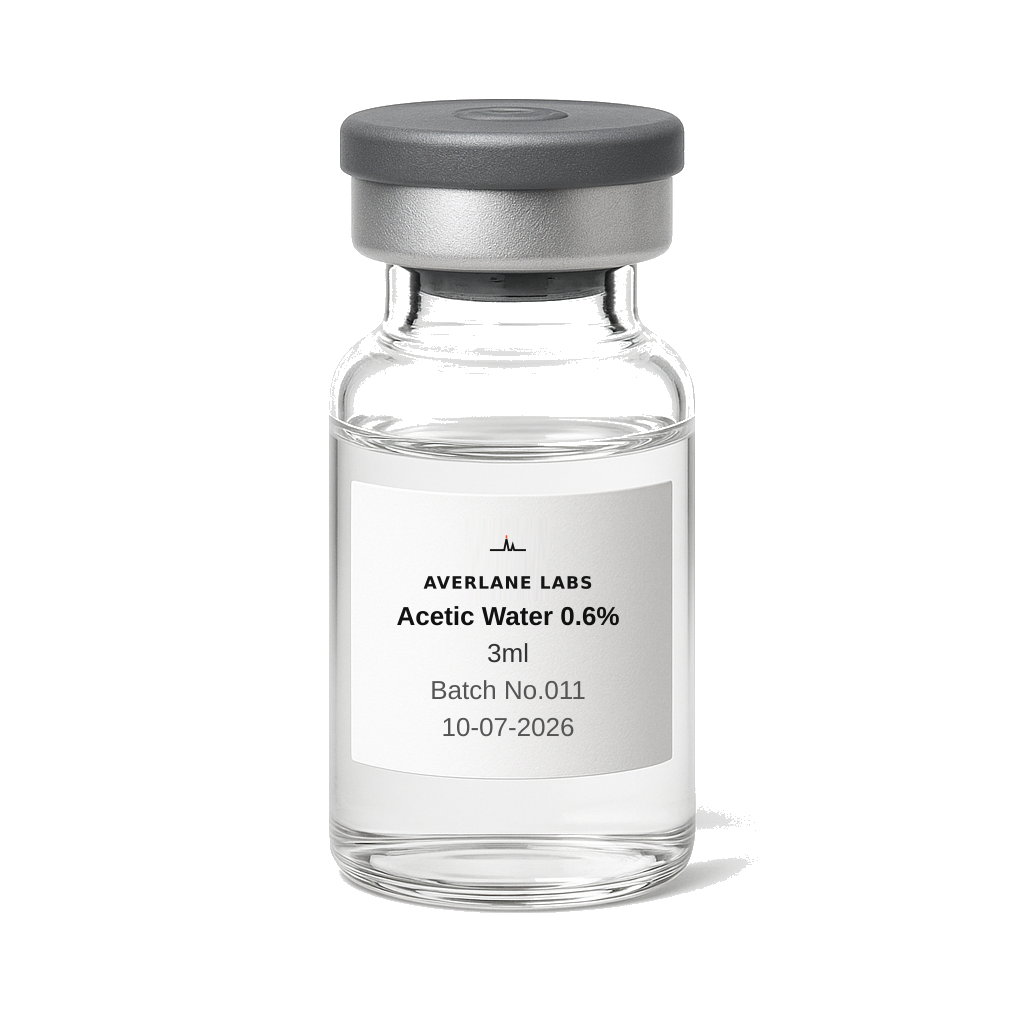
Acetic Water 0.6% 3mg
Certificate of Analysis available on request for the current lot.
Complete the setup
Reconstitution and bench supplies researchers pair with Acetic Water 0.6% 3mg
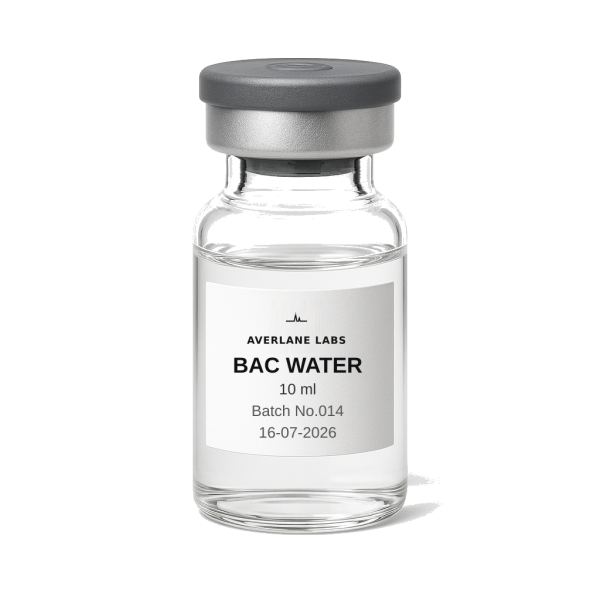
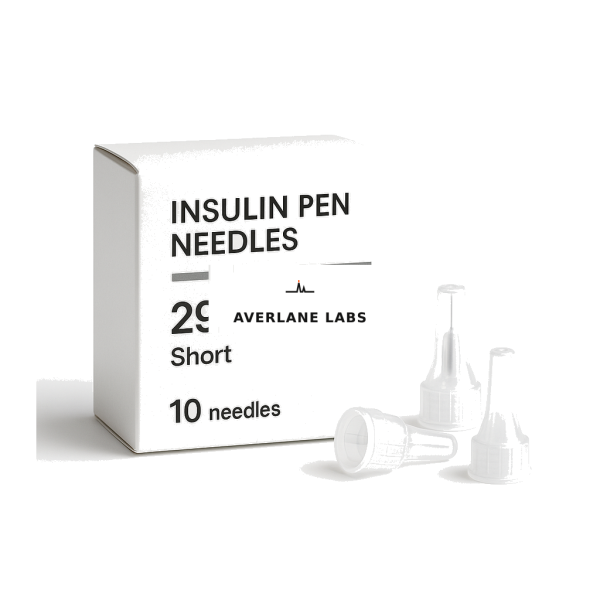
NOT FOR HUMAN CONSUMPTION
Acetic Water 0.6% is an aqueous laboratory solution containing approximately 0.6% acetic acid. It is primarily marketed as a mildly acidic solvent for research compounds, including certain peptides and proteins that display poor solubility, aggregation, or instability in neutral water.
Unlike retatrutide or other bioactive peptides, Acetic Water has no intended receptor-mediated, metabolic, anabolic, or therapeutic activity. Its function is physicochemical: it lowers the pH of a solution and may improve the dissolution or handling of selected research materials.
Products sold as “Acetic Water 0.6%” are generally labelled for laboratory or research use only. They should not be assumed to be pharmaceutical-grade, sterile, pyrogen-free, isotonic, preserved, or suitable for injection merely because they are supplied in a sealed vial.
1. Principal Laboratory Functions
FunctionKey take-aways1. Acidic solubilizationA mildly acidic environment can improve the apparent solubility of some peptides or proteins that dissolve poorly at neutral pH.2. Reduction of aggregationAdjusting pH can alter a peptide’s net charge and reduce self-association or precipitation under specific experimental conditions.3. pH adjustmentThe solution may be used as a laboratory reagent to establish acidic conditions during sample preparation, assay development, or analytical workflows.4. Reconstitution aidSome research suppliers recommend dilute acetic acid for compounds whose validated laboratory protocols require acidic reconstitution.5. Analytical preparationDilute acetic acid solutions are used in certain chromatographic, protein-chemistry, peptide-purification, and buffer-preparation procedures.6. No intrinsic preservation guaranteeAcetic acid at 0.6% must not automatically be treated as a validated antimicrobial preservative for repeated vial access.7. No therapeutic benefitIt does not directly promote weight loss, glycaemic control, muscle growth, recovery, fat oxidation, hormone release, or other physiological outcomes.
The effect of pH on a protein or peptide is compound-specific. pH can influence molecular charge, conformation, solubility, aggregation and biological activity, but an acidic solution can improve one compound while degrading or destabilizing another.
2. Chemical Characteristics
2.1 Composition
Typical nominal composition:
Purified or sterile-labelled water
Acetic acid: 0.6%
Usually no declared buffering salts
Usually no declared antimicrobial preservative unless specifically stated
Usually no tonicity-adjusting agent
When expressed as 0.6% weight/volume, the solution contains approximately:
0.6 g acetic acid per 100 mL
6 mg acetic acid per mL
Approximately 0.10 mol/L acetic acid
Acetic acid has the molecular formula C₂H₄O₂ and a molecular weight of approximately 60.05 g/mol.
2.2 Acidity and pH
Acetic acid is a weak organic acid. An unbuffered 0.6% aqueous solution would theoretically be expected to have a pH around 2.8–3.0, although the measured pH can vary with:
Exact concentration
Water quality
Temperature
Added excipients
Manufacturing tolerances
Interaction with the compound being dissolved
The final pH after reconstitution cannot be predicted from the diluent alone because the lyophilized material and its excipients may substantially alter it.
2.3 Ionization behaviour
Acetic acid dissociates reversibly:
CH₃COOH ⇌ H⁺ + CH₃COO⁻
By increasing hydrogen-ion concentration, the solution changes the ionization state and net charge of susceptible peptides. This may increase electrostatic repulsion between molecules and reduce aggregation, but it may also promote acid-catalysed degradation in unstable compounds.
3. Physicochemical Mechanism
ProcessPotential laboratory effectLimitationProtonation of amino-acid side chainsChanges peptide charge and apparent solubilityHighly sequence-dependentLowered solution pHMay dissolve material that precipitates near its isoelectric regionCan destabilize acid-sensitive moleculesReduced self-associationMay limit aggregation or gel formationDoes not guarantee long-term stabilityAltered surface interactionsMay reduce adsorption or precipitation in some systemsContainer- and formulation-dependentAcidic analytical environmentUseful in certain separation and assay proceduresNot interchangeable with a validated bufferAcetate formationProvides limited acid/acetate buffering after partial neutralizationUnbuffered “acetic water” may have low buffer capacity
Acetic Water should therefore be regarded as a solvent or pH-modifying reagent, not as a universally compatible peptide stabilizer.
4. Pharmacology and Pharmacokinetics
4.1 Pharmacodynamics
Not applicable for its intended research use.
Acetic Water 0.6% has no defined medicinal target, receptor-binding profile, therapeutic dose-response relationship, or clinically validated physiological indication.
4.2 Pharmacokinetics
Not applicable as a standalone laboratory reagent.
Although acetate is a normal human metabolite, this does not establish the safety of injecting a research-grade acetic-acid solution. Product sterility, endotoxin burden, particulate contamination, tonicity, pH, container compatibility and route-specific tissue tolerance remain separate safety requirements.
4.3 Bioactivity
Acetic Water does not create or enhance the inherent biological activity of a research peptide. At most, successful dissolution may allow the compound to be studied in a reproducible experimental system.
An incorrectly selected acidic environment may instead reduce potency through:
Hydrolysis
Deamidation changes
Oxidation
Peptide-bond cleavage
Conformational alteration
Aggregation after subsequent dilution
Adsorption to vial or syringe surfaces
5. Evidence Base
5.1 Laboratory evidence
Dilute acetic acid is well established as a laboratory reagent in protein and peptide chemistry. Acidic aqueous systems are used in certain purification, chromatography, sample-preparation and solubilization procedures.
However, this broad laboratory precedent does not validate a commercially sold “Acetic Water 0.6%” vial for every peptide. Compatibility must be demonstrated for the specific compound, concentration, excipients, temperature, storage period and analytical endpoint.
5.2 Clinical evidence
There is no meaningful clinical-trial evidence supporting Acetic Water 0.6% itself as a treatment for:
Obesity
Diabetes
Hormonal deficiency
Muscle growth
Tissue repair
Anti-ageing
Cognitive enhancement
Fat loss
Liver disease
Athletic performance
Claims of such benefits generally arise from the research compound being dissolved, not from the acetic-acid solution.
5.3 Product-quality evidence
Research-market suppliers commonly describe 0.6% acetic-acid water as a peptide-reconstitution or laboratory solvent, while simultaneously stating that it is not intended for human or veterinary use.
A vendor’s use of terms such as “sterile,” “tested,” “USP-grade” or “multi-use” is not, by itself, equivalent to regulatory approval or independent confirmation that the final product meets all pharmacopoeial requirements for injectable preparations.
6. Safety and Handling
6.1 Local irritation
Because the solution is acidic, potential exposure effects include:
Eye irritation
Skin irritation
Burning of damaged skin
Mucosal irritation
Local tissue irritation
Pain following inappropriate parenteral exposure
Although 0.6% is dilute compared with concentrated acetic acid, acidity remains relevant, particularly for direct tissue exposure.
6.2 Sterility and endotoxins
A clear solution can still contain:
Bacteria
Fungal contamination
Bacterial endotoxins
Subvisible particles
Chemical impurities
Leachables from the vial or stopper
Visual clarity is therefore not evidence of sterility or suitability for injection.
6.3 Preservative status
Acetic Water 0.6% should not be presumed to be bacteriostatic.
Bacteriostatic Water for Injection is a defined pharmaceutical diluent that typically contains a declared antimicrobial preservative, such as benzyl alcohol. FDA-labelled products distinguish it from preservative-free Sterile Water for Injection.
Acetic acid may inhibit some microorganisms under particular conditions, but antimicrobial effectiveness depends on pH, concentration, organism, contact time, formulation and contamination burden. A generic 0.6% solution is not automatically validated for repeated multi-dose use.
6.4 Tonicity
An aqueous 0.6% acetic-acid solution is not necessarily isotonic.
Even pharmaceutical Sterile Water for Injection must not be administered intravenously on its own because its hypotonicity can cause haemolysis.
Adding a peptide or other compound does not automatically produce an isotonic or physiologically compatible preparation.
6.5 Container access
Every vial puncture can introduce contamination. A product labelled “multi-use” by a research supplier does not establish:
Antimicrobial effectiveness
A validated in-use period
Compatibility with repeated punctures
Maintenance of sterility
Acceptable endotoxin levels
Chemical stability of the dissolved compound
6.6 Incompatibility risks
Acetic Water may be unsuitable for compounds that:
Are unstable at low pH
Require a specific buffer system
Require sodium chloride or another tonicity modifier
Require a preservative
Contain acid-sensitive excipients
Precipitate during later neutralization
Adsorb to glass or polymer surfaces
Have manufacturer instructions specifying another diluent
Only the diluent identified in a validated protocol or approved product label should be used for a regulated medicine. FDA labelling for approved lyophilized medicines frequently specifies the exact permitted diluent and may explicitly prohibit alternatives.
7. Comparative Matrix
FeatureAcetic Water 0.6%Sterile Water for InjectionBacteriostatic Water for InjectionBuffered laboratory solutionPrincipal purposeAcidic laboratory solventPharmaceutical reconstitution diluentPreserved pharmaceutical diluentControlled experimental pHTypical acidityStrongly acidicApproximately mildly acidic to neutralUsually near neutralDefined by bufferAntimicrobial preservativeUsually absent or undeclaredNonePresentVariableRepeated vial accessNot inherently validatedGenerally not intended after opening unless specifiedMay permit multiple withdrawals according to labelProtocol-dependentTonicityNot necessarily isotonicHypotonicNot necessarily suitable for direct administrationVariablePeptide solubilizationMay help selected compoundsSuitable where neutral water is validatedSuitable where the compound tolerates preservativeOften most reproducibleInjectable statusDo not assumeOnly as labelled and after appropriate preparationOnly as labelledUsually research onlyRegulatory standardOften research-gradePharmacopoeial pharmaceutical productPharmacopoeial pharmaceutical productDepends on preparationTherapeutic activityNoneNoneNoneNone
8. Regulatory Landscape
Approval status
“Acetic Water 0.6%” sold by peptide-research vendors is generally not an FDA- or EMA-approved medicinal product.
It should not be confused with regulated acetic-acid-containing medicines intended for specific routes, concentrations and indications. A formulation approved for otic, bladder-irrigation or topical use does not establish safety for subcutaneous, intramuscular or intravenous administration.
Research-use status
Typical commercial disclaimers include:
Research use only
Not for human consumption
Not for veterinary use
Not for diagnostic use
Not intended to treat, cure or prevent disease
These restrictions are substantive, not merely marketing language.
Compounding considerations
Preparing a sterile injectable solution requires controls for:
Identity
Strength
Sterility
Bacterial endotoxins
Particulate matter
pH
Osmolality
Container-closure integrity
Chemical stability
Beyond-use dating
A research vial with an unverified certificate of analysis cannot be assumed to satisfy these requirements.
9. Appropriate Research Questions
Acetic Water 0.6% may be investigated for:
Research fieldRelevant questionPeptide chemistryDoes acidic pH improve initial solubility?Formulation scienceDoes it reduce aggregation compared with neutral water?Stability testingHow rapidly does the compound degrade at the resulting pH?Analytical chemistryDoes acetate interfere with chromatography or mass spectrometry?Container compatibilityDoes the formulation increase adsorption or leachables?MicrobiologyDoes the final preparation support microbial growth after handling?Biophysical analysisHow does pH affect conformation and self-association?Process developmentIs a defined acetate buffer more reproducible than unbuffered acetic water?
10. Limitations
Major limitations of generic Acetic Water 0.6% products include:
No universal peptide compatibility
Variable or undisclosed pH
Unclear sterility assurance
Unclear endotoxin specification
No guaranteed antimicrobial preservation
No defined osmolality
No universal storage period after opening
Potential acid-mediated degradation
Vendor-dependent raw materials and manufacturing controls
No evidence of therapeutic benefit
No automatic suitability for human injection
11. Future Directions
Useful areas for formal research include:
Compound-specific solubility curves across pH ranges
Head-to-head comparison with acetate, citrate and phosphate buffers
Long-term peptide stability by HPLC and mass spectrometry
Aggregation analysis using light scattering and size-exclusion chromatography
Antimicrobial-effectiveness testing
Endotoxin and sterility validation
Container-closure compatibility
Freeze–thaw stability
Adsorption to glass, rubber and plastic
Development of standardized, pharmaceutical-grade acidic diluents for compounds that genuinely require them
Evidence Quality Note
The chemical principles behind acidic peptide solubilization are well established, but promotional claims surrounding commercially sold Acetic Water 0.6% are often based on vendor descriptions rather than controlled clinical or pharmaceutical-quality studies.
There are no clinical efficacy data supporting Acetic Water 0.6% as a therapeutic agent. The relevant evidence concerns laboratory chemistry, formulation science and product-quality controls, not health benefits.
Selected References
PubChem, Acetic acid identity, molecular formula and physicochemical properties.
United States Pharmacopeia, Protein and peptide quality standards and the influence of formulation conditions.
FDA prescribing information, Distinction between Sterile Water for Injection and Bacteriostatic Water for Injection.
FDA prescribing information for lyophilized medicines, Requirement to use specifically approved diluents.
Laboratory peptide and protein literature, Use of dilute acetic acid in analytical preparation, purification and solubilization.
Research-product specifications, Commercial positioning of 0.6% acetic-acid water as a laboratory reagent rather than a medicinal product.
Researcher reviews
No reviews yet for this lot line. Verified purchasers can leave the first one.
Reviews
There are no reviews yet.