
Cortagen 20mg vial
Certificate of Analysis available on request for the current lot.
Complete the setup
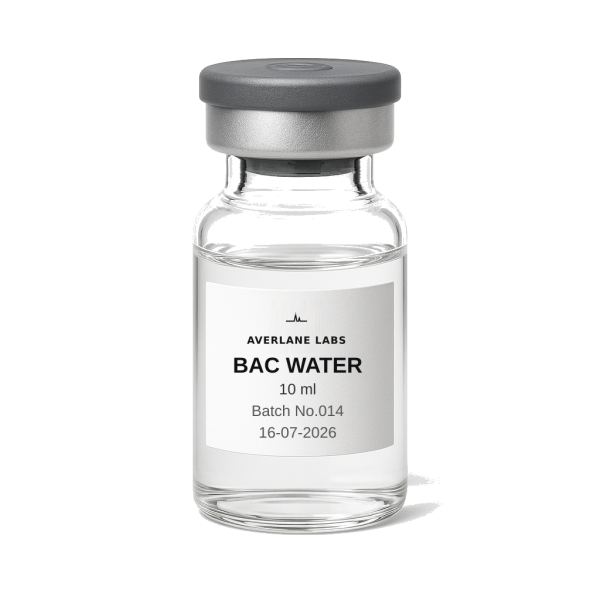
Reconstitution and bench supplies researchers pair with Cortagen 20mg vial

NOT FOR HUMAN CONSUMPTION
Cortagen is a synthetic tetrapeptide with the amino-acid sequence AEDP (Ala–Glu–Asp–Pro). It is widely described as a primary active component identified from Cortexin (a peptide mixture derived from bovine brain cortex) and then reproduced by directed synthesis as a defined short peptide.
Regulatory status: Cortagen is not an FDA/EMA-approved medicine; it is most often encountered as a “bioregulator/research peptide” product.
2) Why this target class is interesting (ultrashort “bioregulator” paradigm)
Cortagen sits in the broader class of ultrashort peptides (2–4 aa) that are proposed to influence biology not via a single receptor, but via cellular/nuclear entry and modulation of gene expression (epigenetic/transcriptional effects). In this framework, small sequence changes can shift which gene networks are affected, and effects can be concentration-dependent.
3) Molecular mechanism of action
3.1 Pharmacodynamics framing
Cortagen is not typically described as a GPCR agonist/antagonist. Instead, the central mechanistic claims in the literature are:
-
Gene-expression regulation footprint: Cortagen (AEDP) produces measurable transcriptional changes in vivo (microarray study).
-
Cell differentiation modulation: Reviews of short peptides report that AEDP can induce differentiation of pluripotent cells, including in nervous tissue contexts, implying a role in cell fate / maturation programs.
-
DNA–peptide interaction hypothesis (class-level): short peptides are proposed to bind specific DNA motifs (in silico docking/interaction studies), providing a plausible physical route to transcriptional modulation.
3.2 Downstream biology map (evidence-weighted)
| DOMAIN | REPORTED / PROPOSED OUTCOME | CONTEXT |
|---|---|---|
| Transcriptional regulation | broad gene-expression changes detectable by microarray | mouse heart study used as “proof-of-footprint” for systemic transcriptional activity |
| Neural differentiation / plasticity | differentiation induction signals for AEDP in nervous tissue | mechanistic review-level claim; translation depends on dosing/exposure |
| Neurorepair (preclinical) | nerve regeneration benefit reported for cortagen | older experimental report cited in summaries; needs careful primary-paper appraisal |
Interpretation constraint: The cleanest, most defensible mechanistic “anchor” is that AEDP produces measurable gene-expression changes, and is discussed within a literature proposing nuclear/epigenetic regulation by short peptides.
4) Chemistry and identity
-
Sequence: Ala–Glu–Asp–Pro (AEDP)
-
Molecule class: unmodified tetrapeptide (no lipidation/pegylation), so stability and exposure are expected to be strongly formulation/route dependent.
Identity caveat (practical): Many vendors sell “Cortagen,” but quality varies. For scientific or product claims, require COA + MS/HPLC to confirm the AEDP sequence and impurity profile.
5) Pharmacokinetics and exposure considerations
There is no drug-label PK for Cortagen. As an unmodified tetrapeptide, key PK realities usually include:
-
rapid enzymatic degradation unless protected by formulation/route,
-
short systemic half-life expected in general for small peptides,
-
high dependence on route (oral/sublingual vs intranasal vs parenteral are not interchangeable without PK bridging).
Because much of the mechanistic argument hinges on intracellular/nuclear effects, credible translation ideally requires demonstration of target-tissue exposure and a reproducible PD signature (e.g., transcriptomic markers).
6) Preclinical and translational evidence
6.1 Microarray “gene-expression footprint” (key mechanistic evidence)
A frequently cited paper examined the effect of Cortagen (AEDP) on gene expression using microarray analysis (mouse heart tissue). The rationale (explicitly stated) is that aging/disease alters gene expression across organs, and peptide bioregulators may correct age-associated transcriptional shifts, so identifying molecular targets is important.
Why it matters: Even though it’s not brain tissue, it supports the idea that AEDP can generate a measurable, system-level transcriptional signature in vivo.
6.2 Cell differentiation programs (supporting biology)
A review on peptide regulation of cell differentiation states that AEDP (along with AEDG) can induce differentiation of pluripotent cells in multiple lineages including nervous tissue, and emphasizes that peptide structure and concentration influence direction of differentiation.
6.3 Regeneration / neuroprotection (older experimental signals)
Summaries and reference lists commonly cite experimental work on sciatic nerve regeneration and broader “neuroprotective peptide” contexts for cortagen, but the strongest readily accessible, indexed mechanistic anchors remain the microarray and differentiation literature above.
7) Safety and tolerability (risk-based framing)
Because Cortagen is generally encountered outside a regulated drug label:
-
No FDA/EMA-style contraindications, interactions, or monitoring guidance exist for consumer/research formats.
-
Dominant real-world risks often relate to identity/purity/sterility (especially for non-GMP supply chains).
-
Mechanism-based uncertainty: any agent posited to modulate transcription may have off-target gene-network effects that are hard to predict without robust PK/PD and controlled human safety datasets.
8) Regulatory landscape
Cortagen is best described as investigational/research in the markets where it is sold, not an approved therapeutic with standardized manufacturing and indications.
9) Future directions (what would validate Cortagen “clinically”)
High-value experiments that would move Cortagen from “bioregulator concept” to evidence-grade pharmacology:
-
PK/BD (biodistribution): quantify exposure after relevant routes; confirm tissue penetration (especially CNS if that’s the claim).
-
PD signature: define a reproducible transcriptomic/proteomic biomarker panel (building off microarray work).
-
Mechanism resolution: map DNA motif binding / chromatin interactions with modern methods (ChIP-like approaches, ATAC-seq shifts), rather than docking alone.
-
Controlled clinical trials: indication-specific endpoints (cognitive/functional metrics, validated neuropsych batteries, imaging biomarkers where relevant), plus long-term safety.
Selected references (most load-bearing)
-
Cortagen identity as AEDP (Ala–Glu–Asp–Pro) and background:
-
Microarray study: effect of cortagen (AEDP) on gene expression in mouse heart:
-
Review: AEDP induces differentiation (including nervous tissue) and peptide structure/concentration dependence:
-
Class-level mechanistic PDF: short peptides regulate gene expression and DNA interaction/docking framework:
Researcher reviews
No reviews yet for this lot line. Verified purchasers can leave the first one.
Reviews
There are no reviews yet.