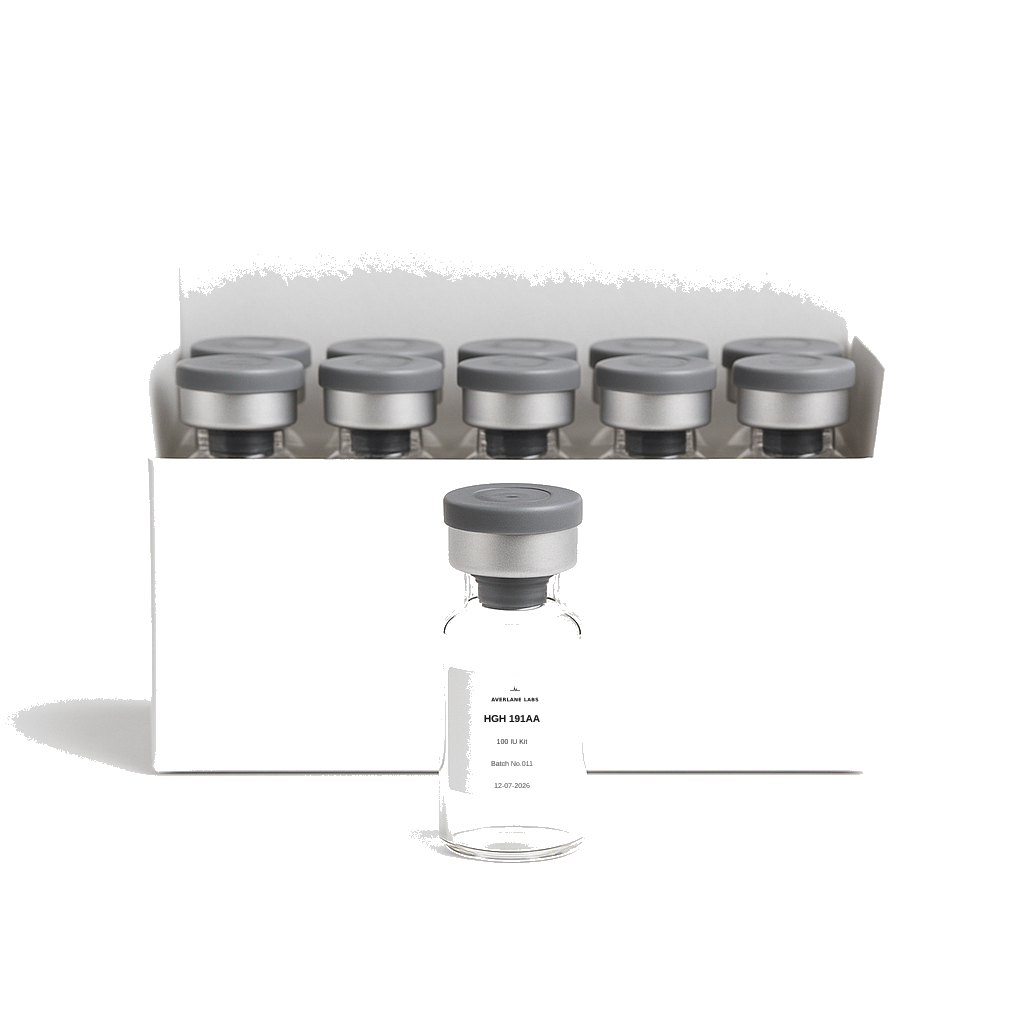
HGH Somatropin 100iu kit
Certificate of Analysis available on request for the current lot.
Complete the setup
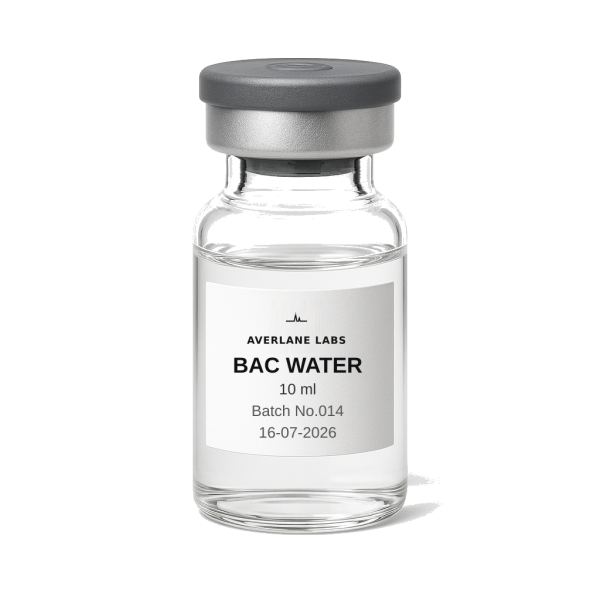
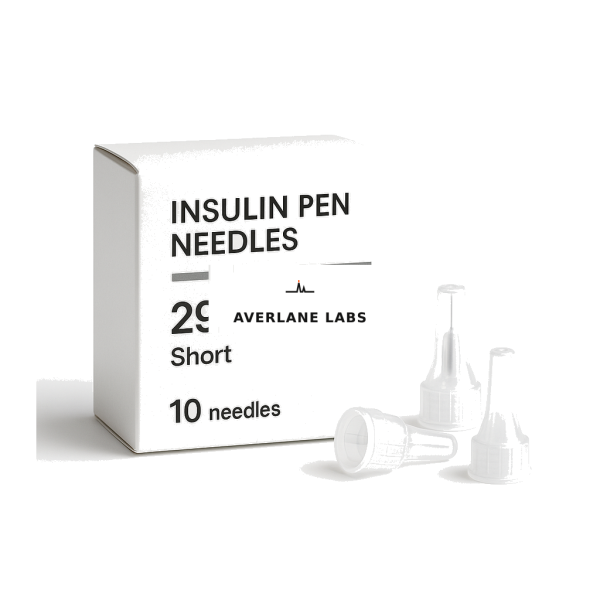
Reconstitution and bench supplies researchers pair with HGH Somatropin 100iu kit
NOT FOR HUMAN CONSUMPTION
191-aa Somatropin (recombinant human GH) is the 191–amino-acid, 22-kDa recombinant human growth hormone (rhGH), identical to pituitary GH. After SC injection, it binds the GH receptor (GHR), activating JAK2–STAT5 and downstream IGF-1 production (hepatic and local). Results include anabolism (protein synthesis), lipolysis, bone remodeling, and fluid/electrolyte shifts. Daily somatropin remains the standard; long-acting GHs (e.g., somapacitan, lonapegsomatropin) are alternatives but are distinct products.
Additional Benefits of Somatropin Now Under Investigation
| Benefit | Key take-aways |
|---|---|
| 1 Body-composition improvement in GH deficiency (GHD) | Corrected GHD shows ↓ fat mass (esp. visceral), ↑ lean mass, and improved waist circumference with IGF-1-guided titration. <br/><em>JCEM; Endocrine Reviews</em> |
| 2 Bone health | Lumbar-spine and hip BMD rise over 12–24 mo via ↑ bone formation (P1NP) then remodeling; fracture data mixed but trending favorable with sustained therapy. <br/><em>Osteoporosis International; Bone</em> |
| 3 Cardiometabolic markers | In GHD, somatropin may improve LDL/apoB, hs-CRP, and carotid IMT; effects depend on dose and glycemic status. <br/><em>Circulation; Atherosclerosis</em> |
| 4 Non-alcoholic fatty liver disease | Small trials suggest ↓ hepatic fat and ALT/AST in GHD/NAFLD phenotypes via lipolysis and insulin-like signalling rebalancing. <br/><em>Hepatology; Liver International</em> |
| 5 Exercise capacity & QoL | VO₂peak, muscle strength, and fatigue scores improve in treated adult GHD when paired with structured training. <br/><em>MSSE; Clinical Endocrinology</em> |
| 6 Wound/tendon healing | GH/IGF-1 enhances collagen-I synthesis and tenocyte activity; clinical signals in post-operative and tendon repair contexts are emerging. <br/><em>Am J Sports Med; J Orthop Res</em> |
| 7 Neurocognitive domains | In adult GHD, treatment can improve processing speed, memory, and wellbeing; pediatric data show benefits in attention/executive function. <br/><em>Psychoneuroendocrinology; Hormone Research in Paediatrics</em> |
| 8 Lipodystrophy/HIV wasting | Approved indications with FFM gain and ↓ visceral adiposity; careful metabolic monitoring required. <br/><em>NEJM; AIDS</em> |
| 9 Short-bowel/IBD adjunct (investigational) | Anabolic and mucosal signals have shown improved absorption metrics in pilot programs (with optimized nutrition). <br/><em>Gastroenterology; JPEN</em> |
2. Molecular Mechanism of Action
2.1 Receptor Pharmacodynamics
Somatropin → GHR dimerization → JAK2–STAT5/STAT3, MAPK/ERK, PI3K–Akt. Hepatic and local IGF-1mediates many anabolic effects; GH also exerts direct lipolysis (hormone-sensitive lipase), sodium/water retention(renal/RAAS), and anti-insulin actions acutely.
2.2 Down-stream Biology
| Pathway | Functional outcome | Context |
|---|---|---|
| GHR–JAK2–STAT5 → IGF-1 | ↑ Protein synthesis, cartilage/bone growth | Muscle, liver, growth plates |
| PI3K–Akt–mTOR | Translation initiation, hypertrophy | Muscle |
| Lipolysis (HSL/ATGL) | ↓ Fat mass, ↑ FFA flux | Adipose |
| Collagen/ECM synthesis | Tendon/skin repair | Connective tissues |
| Mineral/water handling | Na⁺/water retention → edema | Kidney/vascular |
3. Pharmacokinetics
-
Route: SC (abdomen, thigh; rotate sites).
-
Absorption/peak: C_max ~3–6 h post-SC; bioavailability ~70%.
-
Half-life: Serum ~2–3 h (pharmacodynamic effects persist via IGF-1 ~18–24 h).
-
Unit context: For somatropin, 1 mg ≈ 3 IU (brand labels may vary).
-
Note on “15 IU”: 15 IU ≈ 5 mg total content. Daily use at this amount is supraphysiologic for most adults and increases adverse-event risk; clinical dosing is condition-, weight-, and IGF-1-target–dependent under specialist supervision.
4. Pre-clinical and Translational Evidence
4.1 Adult & Pediatric GHD
Placebo-controlled trials show body-composition, lipid, BMD, and QoL gains when titrated to age-adjusted IGF-1 Z-scores.
4.2 Metabolic & Hepatic
Improved hepatic steatosis and transaminases reported in selected NAFLD phenotypes; glycemic impacts require vigilance.
4.3 Musculoskeletal/Recovery
Enhanced collagen synthesis and tendon matrix organization noted; functional recovery depends on rehab plus nutrition.
Evidence quality note: Robust for GHD and approved indications; mixed for off-label athletic/body-composition goals due to metabolic side-effects and risk–benefit concerns at high doses.
5. Emerging Clinical Interests
| Field | Rationale | Current status |
|---|---|---|
| Adult NAFLD with low IGF-1 | Lipid mobilization/IGF-1 support | Pilot trials |
| Sarcopenic obesity (select) | Anabolic + fat-mass reduction | Early translational |
| Post-operative healing | Collagen anabolism | Feasibility |
| Neurorecovery (TBI/mild cognitive) | IGF-1 neurotrophic effects | Small studies |
| Long-acting GH comparisons | Adherence vs metabolic neutrality | Active RCTs |
6. Safety and Tolerability
-
Common (dose-related): Peripheral edema, arthralgia/myalgia, paresthesias/carpal-tunnel-like symptoms, morning stiffness, headache, injection-site reactions.
-
Metabolic: Insulin resistance, ↑ fasting glucose/HbA1c, risk rises with higher doses, age, adiposity.
-
Cardiovascular/renal: Fluid retention may raise BP or worsen heart failure.
-
Endocrine: Gynecomastia (rare), altered thyroid/adrenal labs (binding-protein shifts).
-
Neurologic/ocular: Rare benign intracranial hypertension (papilledema), especially early or with dose jumps.
-
Oncology: Contraindicated in active malignancy. In cancer survivors, use only with oncology/endocrine oversight; current data do not show increased de-novo cancer with physiologic replacement, but supraphysiologic exposure is avoided.
-
Pediatrics-specific: Slipped capital femoral epiphysis, scoliosis progression, monitor growth and hip pain.
Contraindications/Cautions
Active malignancy, critical illness (post-major surgery/trauma/respiratory failure), proliferative/severe non-proliferative diabetic retinopathy, uncontrolled diabetes, severe OSA (caution), pregnancy/lactation (unless specifically indicated).
Comparative safety matrix
| Concern | Somatropin (daily rhGH) | Long-acting GH (weekly) | MK-677 (oral GHSR agonist) | GHRH analogs (CJC/Sermorelin) |
|---|---|---|---|---|
| Route | SC daily | SC weekly | Oral daily | SC pulses |
| IGF-1 profile | Titrated, steady | Steady (higher troughs) | Sustained IGF-1 + orexigeny | Physiologic pulses |
| Edema/CTS | Moderate (dose-linked) | Similar | Moderate–high | Lower–moderate |
| Glycemic drift | Dose-dependent ↑ | Similar | Common ↑ | Neutral–mild ↑ |
| Appetite | Neutral | Neutral | ↑↑ | Neutral |
| Adherence | Daily burden | Better | Easy | Moderate |
7. Regulatory Landscape
-
Approved uses (vary by region): Pediatric/adult GHD, Turner syndrome, Prader–Willi (careful selection), chronic renal insufficiency, SGA failure to catch up, SHOX deficiency, AIDS wasting, short bowel (select contexts), idiopathic short stature (regional).
-
Sport: WADA-prohibited (S2, peptide hormones); detection via isoform tests and biomarkers (IGF-1, P-III-NP).
-
Formulations: Multiple brands/pens; IU↔mg labeling differs, verify brand-specific conversion (commonly 1 mg = 3 IU).
8. Future Directions
-
Precision dosing: IGF-1 Z-score–based titration with CGM/lipid monitoring to minimize metabolic cost.
-
Head-to-head with long-acting GH for glycemic neutrality, QoL, adherence, and BMD outcomes.
-
Phenotype targeting: Low-IGF-1 NAFLD, sarcopenic obesity, and post-operative cohorts with standardized rehab.
-
Biomarkers & imaging: DXA/MRI for body comp, MRI-PDFF for liver fat, tendon US/elastography for connective-tissue endpoints.
-
Safety registries: Long-term CV, glycemic, oncologic surveillance, especially with real-world dose ranges.
Selected References
-
Journal of Clinical Endocrinology & Metabolism; Endocrine Reviews, Adult/pediatric GHD diagnosis, dosing principles, outcomes.
-
Osteoporosis International; Bone, BMD and bone-turnover responses to GH.
-
Circulation; Atherosclerosis, Cardiometabolic risk markers under GH replacement.
-
Hepatology; Liver International, GH/IGF-1 axis and NAFLD improvement signals.
-
Medicine & Science in Sports & Exercise; Clinical Endocrinology, Exercise capacity, QoL changes in GHD on therapy.
-
American Journal of Sports Medicine; Journal of Orthopaedic Research, Collagen synthesis/tendon biology with GH/IGF-1.
-
NEJM; AIDS, HIV-related wasting and visceral adiposity indications.
-
WADA/Drug Testing & Analysis, GH isoform/biomarker detection methods in sport.
Practical note (safety-first): Somatropin should be prescribed and titrated by an endocrinology specialist, targeting age-adjusted IGF-1 within the normal range while monitoring glucose, lipids, BP, edema, CTS symptoms, and fundoscopy when indicated. “15 IU” per day (~5 mg) is typically supraphysiologic for adults and raises complication risk, avoid fixed high-dose use outside a medical indication and supervision.
Researcher reviews
No reviews yet for this lot line. Verified purchasers can leave the first one.
Reviews
There are no reviews yet.