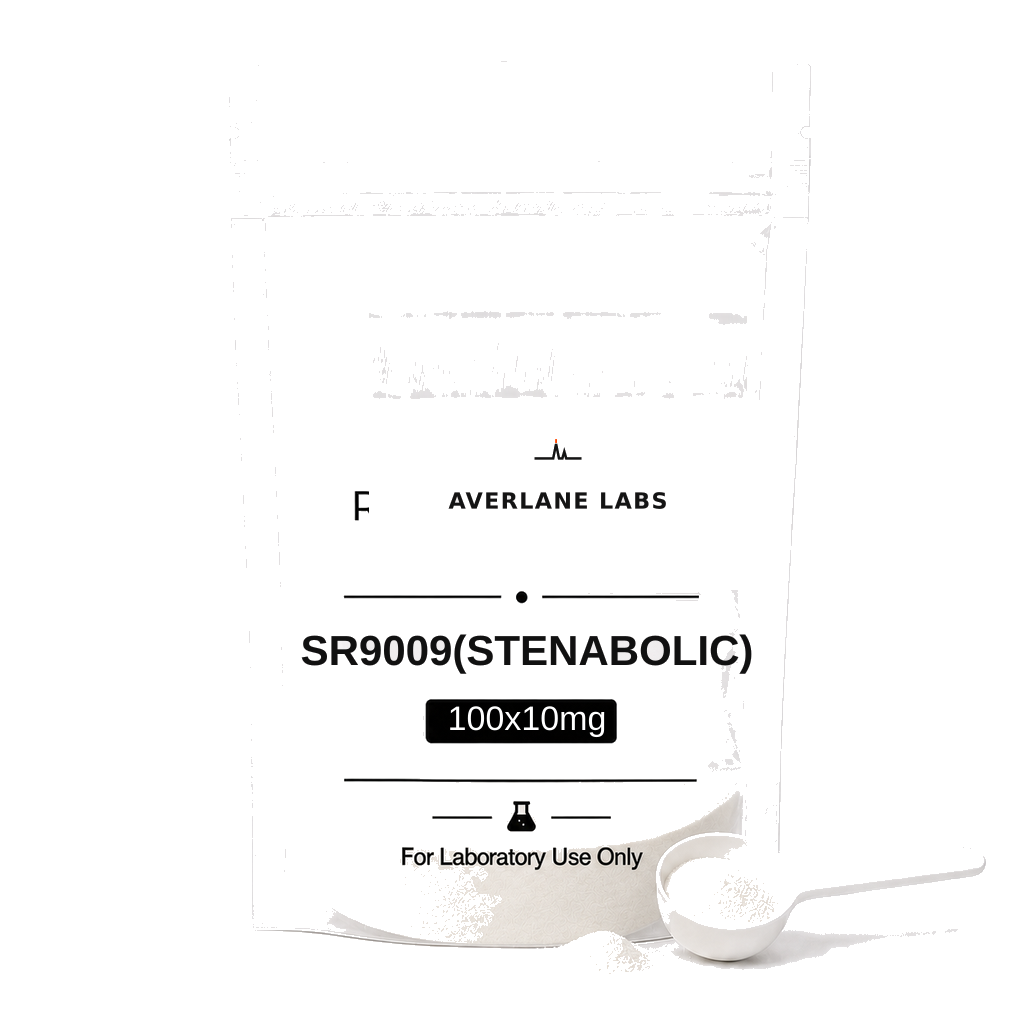
SR9009(Stenabolic) 100x10mg
Certificate of Analysis available on request for the current lot.
Complete the setup
Reconstitution and bench supplies researchers pair with SR9009(Stenabolic) 100x10mg
NOT FOR HUMAN CONSUMPTION
SR9009 is a synthetic agonist of the nuclear receptors REV-ERBα/β (NR1D1/NR1D2), transcriptional repressors that help run the circadian clock and control genes for metabolism, inflammation, and mitochondrial turnover. Unlike internet marketing that labels it a “SARM,” SR9009 does not act on the androgen receptor. Agonism recruits corepressors (e.g., NCoR/HDAC3), suppresses clock output (e.g., BMAL1), and shifts downstream metabolic programs. PMC+1
Pharmacology & PK at a glance
-
Mechanism: REV-ERB activation → repression of clock/immune/lipid genes; enhances oxidative metabolism programs in muscle and other tissues. PMC
-
Pharmacokinetics: First-generation chemotype with short exposure and poor oral bioavailability; most in-vivo work used frequent dosing. Next-generation ligands (e.g., GSK2945, SR12418, STL1267) were designed to improve potency/selectivity and PK. PMC+2PMC+2
-
Regulatory status: No approved human indication; sold online as a “research chemical.” (Some regulators explicitly caution against human use.) Therapeutic Goods Administration (TGA)
Preclinical efficacy signals
Metabolism & exercise capacity
-
Skeletal muscle: Genetic or pharmacologic REV-ERB activation increases mitochondrial content/respiration and improves running time and distance in mice; SR9009 increased mitochondria in myotubes and enhanced endurance. PMC
-
Whole-body circadian/metabolic effects: Acute SR9009/SR9011 dosing suppresses BMAL1, alters activity rhythms, and modulates lipid/glucose pathways. PMC
Inflammation & tissue protection
-
In models such as colitis and myocardial ischemia-reperfusion, SR9009 showed efficacy that was lost in REV-ERBα-knockout mice, supporting on-target activity in those settings. PMC
Cardiovascular remodeling
-
Reports in pressure-overload models suggest attenuation of adverse cardiac remodeling, though authors note uncertainty about on-target vs off-target contributions. Frontiers
Oncology
-
Multiple groups report anti-proliferative or pro-apoptotic effects of REV-ERB agonists (including SR9009) across cancer models; some data indicate REV-ERB-independent cytotoxicity and other nuclear-receptor cross-talk (e.g., LXR). PMC
Limitations & controversies
-
Target specificity is debated. A PNAS study showed SR9009 retained strong effects in cells lacking REV-ERBα/β, implying off-target mechanisms; other work observed LXRα activity with this chemotype. Bottom line: SR9009 is a useful tool but not a clean probe. PNASPubMedPMC
-
PK constraints. Compared with newer scaffolds, SR9009 has short half-life/low oral exposure, limiting translational potential and complicating dosing paradigms in animals; later ligands (e.g., GSK2945, SR12418, STL1267) were engineered to address this. PMC+2PMC+2
-
Human evidence is absent. As of 2025 there are no peer-reviewed, controlled human trials of SR9009 for any indication. Most claims online derive from mouse studies or cell culture, which may not predict human benefit/safety. (Regulators have warned against unapproved use.) Therapeutic Goods Administration (TGA)
Safety perspective
-
Unknown human safety profile. No clinical dosing, exposure, or adverse-event database exists.
-
In vitro liabilities. Several groups report cytotoxicity at micromolar concentrations and REV-ERB-independent gene effects, underscoring the risk of off-target toxicity. PNAS
-
Research direction: Current academic/industry programs focus on newer, cleaner REV-ERB ligands with validated target engagement (e.g., STL1267 co-crystal structure) before meaningful clinical translation. PMC
Practical takeaways
-
SR9009 helped establish REV-ERB as a druggable node for circadian biology, metabolism, and inflammation, but its chemical liabilities and specificity issues make it unsuitable for human use and suboptimal as a definitive target probe.
-
If you’re evaluating the therapeutic concept, prioritize literature using genetic models, REV-ERB-dependent rescue/knockout controls, and newer ligands with documented PK/target engagement.
References
-
Solt LA et al. Regulation of Circadian Behavior and Metabolism by Synthetic REV-ERB Agonists. 2012. PMC+1
-
Woldt E et al. REV-ERB-α modulates skeletal muscle oxidative capacity by regulating mitochondrial biogenesis and autophagy. 2013. PMC
-
Wang S et al. Targeting REV-ERBα for therapeutic purposes: promises and challenges. 2020 (review). PMC
-
Dierickx P et al. SR9009 has REV-ERB-independent effects on cell proliferation and metabolism. PNAS 2019. PNASPubMed
-
Trump RP et al. Optimized Chemical Probes for REV-ERBα. J Med Chem 2013. PMC
-
Murray MH et al. Structural basis of synthetic agonist activation (STL1267) of REV-ERBα. 2022. PMC
-
Li H et al. SR9009 and cardiac remodeling after pressure overload. Front Cardiovasc Med 2022. Frontiers
-
Australian TGA. Stenabolic (SR9009), scheduling decision & cautions. 2017.
Researcher reviews
No reviews yet for this lot line. Verified purchasers can leave the first one.
Reviews
There are no reviews yet.