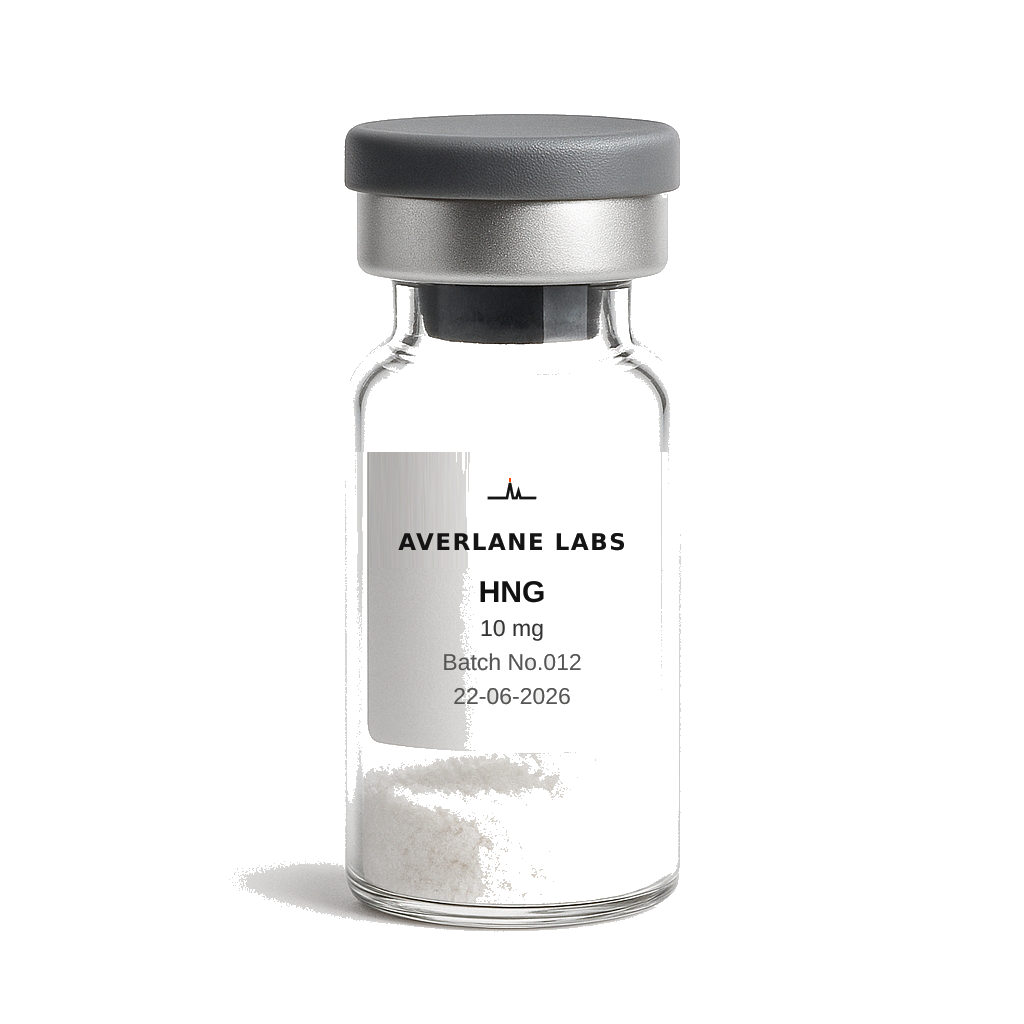
HNG 10mg vial
Certificate of Analysis available on request for the current lot.
Complete the setup
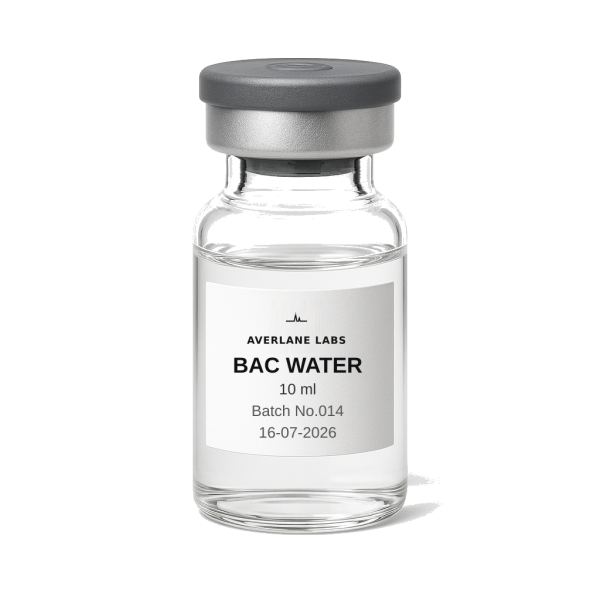
Reconstitution and bench supplies researchers pair with HNG 10mg vial

NOT FOR HUMAN CONSUMPTION
HNG usually refers to S14G-humanin, a synthetic analog of the mitochondrial-derived peptide humanin in which serine at position 14 is replaced with glycine. It is best viewed as an investigational cytoprotective / neuroprotective peptide, not a proven therapeutic or consumer anti-aging treatment. The strongest case for HNG is still preclinical, especially in neuroprotection, metabolic disease models, cardiovascular injury, and other stress-resistance settings. Human therapeutic evidence is essentially absent or extremely limited, so the right framing is promising biology, unproven clinical utility.
Additional benefits of HNG under investigation
| Benefit | Take-away |
|---|---|
| 1. Neuroprotection | This is the clearest and oldest HNG niche. Animal and cell studies support protection against ischemic, excitotoxic, and neurodegenerative insults, but this remains preclinical. |
| 2. Alzheimer’s / amyloid-related interest | HNG has been studied for protection against amyloid-related injury and protein-misfolding toxicity, but this is still model-based evidence rather than established clinical therapy. |
| 3. Metabolic / diabetes relevance | HNG and related mitochondrial-derived peptides have shown interesting effects in models relevant to insulin resistance, beta-cell stress, and amyloid toxicity, but this is exploratory. |
| 4. Cardioprotection | Preclinical studies suggest HNG can reduce injury in myocardial ischemia/reperfusion models, including a large-animal MI study, but this has not translated into established clinical use. |
| 5. Anti-apoptotic / cytoprotective signaling | A major theme across tissues is protection from oxidative stress, hypoxia, toxic injury, and apoptosis. |
| 6. Hair-growth interest | HNG has shown pro-anagen and anti-apoptotic effects in hair-follicle models, but this is a niche preclinical application, not a validated hair-loss therapy. |
| 7. Healthy-aging / “metabolic healthspan” interest | Animal work suggests HNG can improve some metabolic and inflammatory aging markers, but that is far from proving it as a human longevity therapy. |
| 8. Not a proven anti-aging medicine | Marketing around humanin analogs often runs ahead of the evidence. HNG remains a research peptide with no established broad clinical indication. |
2. Molecular mechanism of action
2.1 Receptor pharmacodynamics
HNG does not behave like a classic small-molecule drug with one clean receptor story. Humanin-family peptides signal through both extracellular receptor systems and intracellular anti-apoptotic interactions. Reviews describe signaling through a trimeric CNTFR/WSX-1/gp130 receptor complex with downstream JAK/STAT activation, while other work highlights intracellular interactions with pro-apoptotic proteins such as BAX and related cell-death machinery. HNG is generally treated as a more potent analog of native humanin in these cytoprotective pathways.
2.2 Downstream biology
| Pathway / theme | Functional outcome | Context |
|---|---|---|
| JAK2/STAT3 and PI3K/AKT signaling | Survival / anti-apoptotic signaling | Neuroprotection and ischemia models |
| Anti-apoptotic protein interactions | Reduced programmed cell death | Broad cytoprotection |
| AMPK / metabolic signaling interest | Possible calorie-restriction-mimetic / metabolic effects | Aging and metabolism research |
| Anti-aggregation / chaperone-like activity | Inhibition of toxic protein misfolding / seeding in some models | Amyloid and diabetes-related proteinopathy research |
These pathways make HNG biologically interesting, but they still do not establish strong clinical efficacy in humans.
3. Pharmacokinetics
Routes studied: mainly experimental systemic administration and other preclinical delivery strategies. The practical problem is that HNG is still a peptide, so stability, distribution, and dosing remain major translational issues. The field’s interest in HNG comes more from its higher potency versus native humanin than from any clearly solved delivery platform. That is one reason why the evidence base remains heavily preclinical.
4. Pre-clinical and clinical evidence
4.1 Neuroprotection
This is the best-supported niche. Reviews and primary studies report that HNG protects neurons in models of ischemia/reoxygenation, amyloid toxicity, and other neurodegenerative stressors. For example, one study found HNG protected against oxygen-glucose-deprivation/reoxygenation injury through JAK2/STAT3 via PI3K/AKT signaling. That is a credible neuroprotective signal, but it is still cell / animal evidence, not human proof.
4.2 Metabolic disease and diabetes-related proteinopathy
HNG has also drawn attention in metabolic disease because it can interfere with IAPP misfolding / seeding and is discussed alongside beneficial metabolic effects of mitochondrial-derived peptides. This is one of the more interesting mechanistic extensions beyond neurology, but it remains an early translational story rather than established diabetes therapy.
4.3 Cardiovascular protection
HNG has shown protective effects in cardiovascular injury models. A 2020 large-animal myocardial ischemia/reperfusion study reported reduced infarct size at one ischemic duration, while another preclinical heart-failure study suggested delayed dysfunction and remodeling in mice. Those are encouraging signals, but they are still preclinical and condition-specific.
4.4 Aging, inflammation, and broader cytoprotection
Reviews describe HNG as a potent humanin analog with cytoprotective roles across age-related disease models, and animal work suggests it may improve some metabolic healthspan and inflammatory parameters. That is enough to justify healthy-aging interest, but not enough to justify calling HNG a proven longevity intervention.
4.5 Human evidence
This is the weak point. I did not find good evidence of established therapeutic human clinical trials for HNG itself in the sources reviewed. The literature is dominated by cell studies, animal studies, and reviews. That absence matters: HNG may be biologically impressive, but it is still not a validated clinical peptide.
5. Emerging clinical interests
| Field | Rationale | Status |
|---|---|---|
| Neurodegeneration / ischemic injury | Strongest historic use case | Preclinical-heavy |
| Metabolic disease / T2D | Anti-amyloid and metabolic effects | Exploratory |
| Cardiovascular injury | Cytoprotection in MI / HF models | Preclinical |
| Hair biology | Anti-apoptotic follicle effects | Early preclinical |
| Healthy aging / inflammation | Healthspan and inflammatory-marker interest | Exploratory |
6. Safety and tolerability
There is no mature human safety database for HNG comparable to what would be expected for an approved drug. The reassuring part is that many preclinical studies report beneficial effects without obvious major toxicity signals in their model systems, but that is not the same as establishing human short-term or long-term safety. The best overall safety framing is therefore insufficiently characterized in humans.
7. Contraindications and cautions
Use extra caution with:
- Any claim that HNG is a proven anti-aging, neuroregenerative, or metabolic therapy, because the evidence remains predominantly preclinical.
- Self-experimentation / gray-market peptide use, because clinical dosing, efficacy, and safety are not established.
- Assuming potency equals clinical utility, because HNG’s stronger activity than native humanin does not solve the broader translation problem.
- Replacing standard therapy for neurodegenerative, cardiovascular, metabolic, or hair conditions, because HNG is still investigational.
8. Comparative practical matrix
| Feature | HNG |
|---|---|
| Main strength | Investigational cytoprotective / neuroprotective humanin analog |
| Best-supported use case | Preclinical neuroprotection |
| Clinical evidence depth | Very limited |
| Core limitation | Mostly animal and mechanistic evidence |
| Main mechanism themes | Anti-apoptotic, JAK/STAT, PI3K/AKT, metabolic / anti-aggregation signaling |
| Main delivery problem | Peptide translation and PK practicality |
| Main safety concern | Sparse human safety data |
| Best practical framing | Research peptide, not a proven therapy |
9. Regulatory landscape
HNG is best understood as a research peptide, not an approved drug, established supplement, or validated medical treatment. The literature validates scientific interest, not routine clinical use. That distinction is important because the public-facing peptide market often makes HNG sound much closer to translation than the evidence supports.
10. Future directions
The most useful future work would be:
- real human pharmacokinetic and safety studies,
- indication-specific trials in neurology, cardiometabolic disease, or aging-related dysfunction,
- clearer definition of which mechanisms matter most in vivo,
- and better delivery strategies that make HNG clinically practical rather than just biologically potent.
Best balanced summary
HNG is best viewed as a potent synthetic humanin analog with substantial preclinical evidence for cytoprotective, neuroprotective, metabolic, and cardioprotective effects. Its biology is credible and often impressive in model systems, but the translation gap is large: human therapeutic evidence is minimal, safety is not well characterized clinically, and there is no established approved indication.
Selected references
- Karachaliou CE, et al. Neuroprotective Action of Humanin and Humanin Analogues. Good modern review of humanin analog neuroprotection, including HNG.
- Coradduzza D, et al. Humanin and Its Pathophysiological Roles in Aging. Strong review for aging, metabolic, and cytoprotective framing.
- Gao GS, et al. Humanin analogue, S14G-humanin, has neuroprotective effects against oxygen glucose deprivation/reoxygenation by reactivating Jak2/Stat3 signaling through the PI3K/AKT pathway. Good primary mechanistic neuroprotection study.
- Okada AK, et al. The Mitochondrial-Derived Peptides, HumaninS14G and SHLP2, inhibit the formation of misfolded islet amyloid polypeptide. Best source for the anti-aggregation / T2D-related angle.
- Sharp TE III, et al. Efficacy of a Novel Mitochondrial-Derived Peptide in a Porcine Model of Myocardial Ischemia/Reperfusion Injury. Best source for large-animal cardioprotection.
Researcher reviews
No reviews yet for this lot line. Verified purchasers can leave the first one.
Reviews
There are no reviews yet.