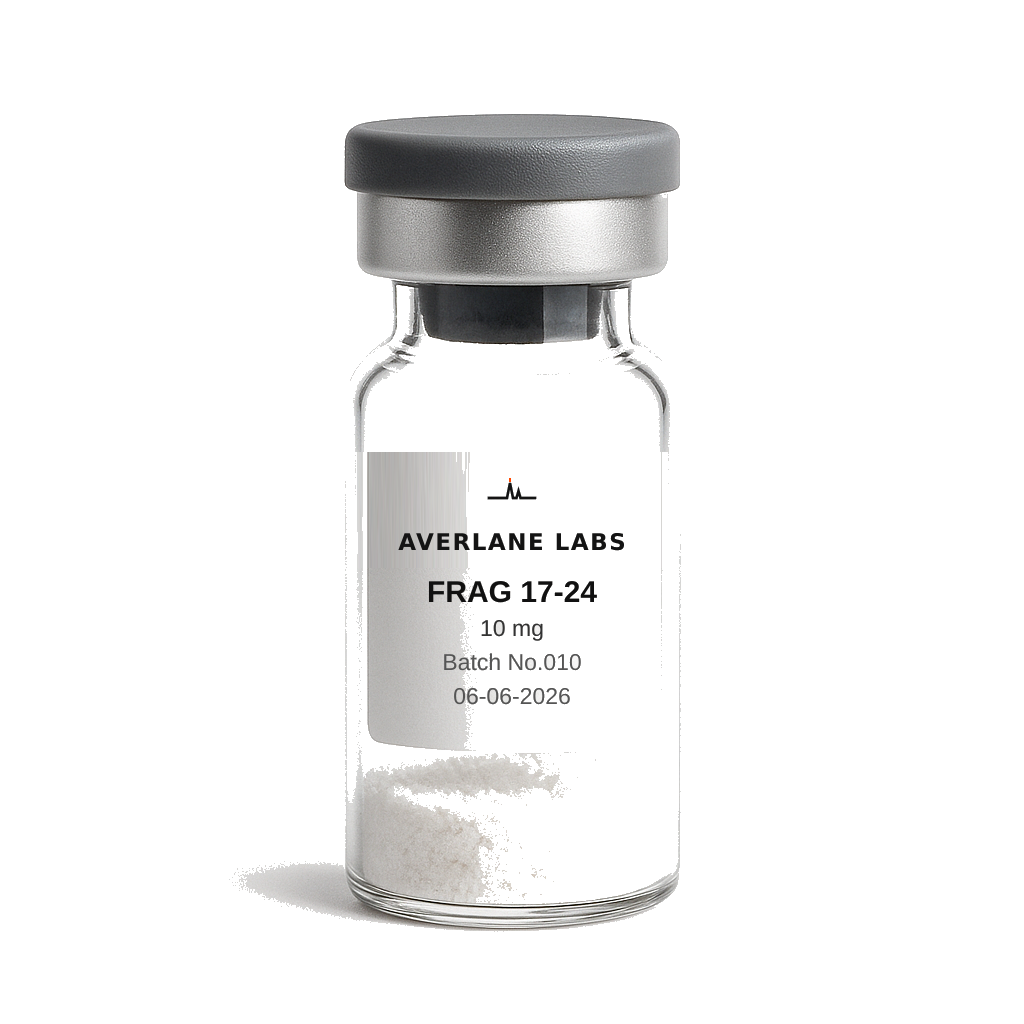
Thymosin β4 Fragment 17–24 10mg vial
Certificate of Analysis available on request for the current lot.
Complete the setup
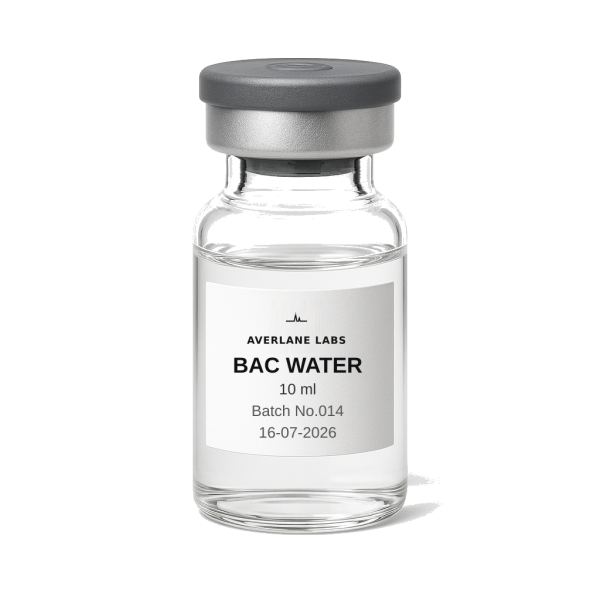
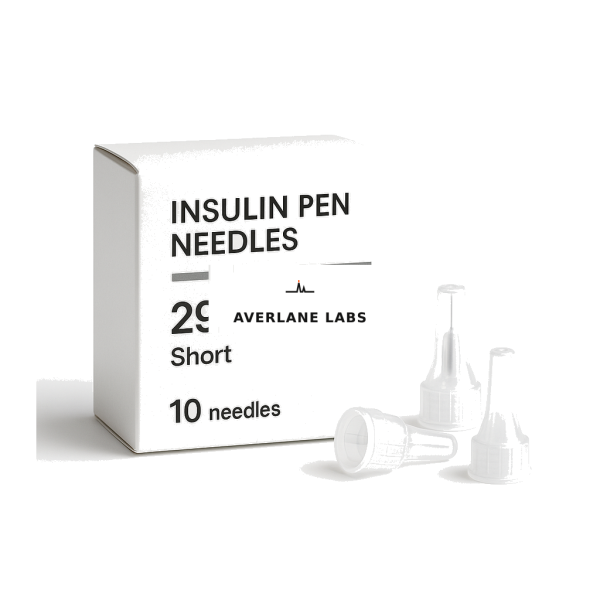
Reconstitution and bench supplies researchers pair with Thymosin β4 Fragment 17–24 10mg vial
NOT FOR HUMAN CONSUMPTION
"Frag 17–24" refers to the actin-binding core motif of thymosin β4 (Tβ4), the octa/heptapeptide sequence around residues 17–24 (canonical: LKKTETQE / 17–23 LKKTETQ). This short fragment retains key cell-migration and cytoskeletal activities attributed to full-length Tβ4 and is used in research under the colloquial name TB-500 (a Tβ4-derived fragment). It is explored for wound repair, tendon/ligament recovery, angiogenesis, and anti-inflammatory remodeling. No product in this class is FDA/EMA-approved.
Additional Benefits of Tβ4 Frag 17–24 (TB-500-class) Now Under Investigation
| Benefit | Key take-aways |
|---|---|
| 1 Accelerated wound closure & re-epithelialization | Fragment promotes keratinocyte migration, lamellipodia formation, and granulation tissue; topical or perilesional dosing shortens time-to-closure in animal cutaneous wounds. <br/><em>Wound Repair & Regeneration; Journal of Investigative Dermatology</em> |
| 2 Angiogenesis & perfusion restoration | Up-regulates VEGF, HIF-1α, and endothelial outgrowth, improving microvascular density in ischemic tissue models. <br/><em>Circulation Research; Angiogenesis</em> |
| 3 Tendon/ligament healing | Enhances tenocyte migration, collagen I/III alignment, and mechanical strength post-injury; synergy reported with eccentric-loading rehab. <br/><em>American Journal of Sports Medicine; Journal of Orthopaedic Research</em> |
| 4 Anti-inflammatory remodeling | Dampens NF-κB/TNF-α/IL-1β and shifts macrophages toward pro-resolving phenotypes, reducing edema and scar thickness. <br/><em>Journal of Immunology; Inflammation Research</em> |
| 5 Cardioprotection (preclinical) | In myocardial I/R and chronic ischemia models, Tβ4-motif peptides reduce apoptosis, enhance Akt/ILK signalling, and limit fibrosis, improving function. <br/><em>Circulation; Cardiovascular Research</em> |
| 6 Corneal/ocular surface repair | Speeds corneal epithelial healing and nerve regeneration with improved tear-film metrics in dry-eye/keratitis models. <br/><em>Investigative Ophthalmology & Visual Science; Cornea</em> |
| 7 Skeletal muscle regeneration | Augments satellite-cell migration, myotube formation, and vascular support after contusion/strain. <br/><em>FASEB Journal; Muscle & Nerve</em> |
| 8 Anti-fibrotic signaling | Lowers TGF-β/CTGF and disordered collagen deposition in skin and tendon, yielding more elastic scars. <br/><em>Matrix Biology; Fibrogenesis & Tissue Repair</em> |
| 9 Hair-follicle cycling (exploratory) | Tβ4-derived sequences can activate anagen, increase VEGF around follicles, and improve shaft calibre in murine models. <br/><em>Experimental Dermatology; Dermatologic Therapy</em> |
2. Molecular Mechanism of Action
2.1 Receptor/Target Pharmacodynamics
The LKKTETQ(E) motif binds G-actin, modulating actin sequestration and polymerization. Downstream, it engages integrin-linked kinase (ILK) and PI3K–Akt, influences focal-adhesion dynamics (FAK/vinculin), and induces MMP-2/9 for controlled matrix remodeling. Indirect effects include VEGF/HIF-1α induction and NF-κB tempering in inflamed tissue.
2.2 Down-stream Biology
| Pathway | Functional outcome | Context |
|---|---|---|
| Actin–ILK–Akt | Cell migration, survival, cytoskeletal repair | Keratinocytes, tenocytes, endothelium |
| FAK/MMP program | Matrix remodeling, sprouting angiogenesis | Wound bed, tendon/ligament |
| HIF-1α → VEGF | Neovascularization, improved perfusion | Ischemic tissue, cornea |
| NF-κB down-tuning | ↓ TNF-α/IL-1β, pro-resolving macrophages | Inflamed wounds, tendon sheath |
| TGF-β/CTGF restraint | ↓ pathologic fibrosis, better collagen alignment | Scar/Tendon matrix |
3. Pharmacokinetics
-
Route/formulations: Investigated subcutaneous/perilesional injections, topical gels/eye drops, and biomaterial dressings.
-
Half-life: Short (minutes–hours); biological effects persist via transcriptional and matrix changes.
-
Distribution: Predominantly local; systemic exposure limited unless high/IV doses used.
-
Clearance: Peptidase degradation; no CYP interactions expected.
4. Pre-clinical and Translational Evidence
4.1 Cutaneous & Soft-tissue Repair
Multiple rodent and porcine models show faster closure, improved tensile strength, and reduced scar with fragment dosing vs control, paralleling full-length Tβ4.
4.2 Musculoskeletal
In tendon laceration/overuse models, fragment treatment improved collagen fibre orientation and load-to-failure; functional recovery was enhanced when combined with graded loading.
4.3 Ocular Surface
Topical derivatives accelerated corneal re-epithelialization, decreased pain/staining, and supported subbasal nerveregrowth.
Evidence quality note: Most data are pre-clinical or early clinical/ophthalmic pilot; standardized, placebo-controlled human trials for musculoskeletal uses remain limited.
5. Emerging Clinical Interests
| Field | Rationale | Current status |
|---|---|---|
| Chronic wounds (DFU/VLU) | Pro-migration + antibiofilm-friendly remodeling | Early clinical/feasibility |
| Tendon/ligament rehab | Faster matrix repair with better alignment | Pre-clinical → small series |
| Corneal disease/dry eye | Epithelial/nerve repair | Early ophthalmic pilots |
| Cardiac ischemia | Cytoprotection + microvascular support | Pre-clinical |
| Scar modulation | Anti-fibrotic remodelling | Pre-clinical/observational |
6. Safety and Tolerability
-
Common (local): Mild injection-site irritation or stinging with topicals; transient erythema.
-
Systemic: Limited data; short peptides generally well tolerated in animals at research doses.
-
Theoretical cautions: Pro-angiogenic activity may be undesirable in active malignancy or proliferative retinopathies; monitor for exuberant granulation in high-dose topical use.
-
Quality/purity: Grey-market products vary; prefer GMP-grade materials in research.
Comparative safety matrix
| Concern | Tβ4 Frag 17–24 (TB-500-class) | Full-length Tβ4 (43 aa) | BPC-157 |
|---|---|---|---|
| Size/PK | Short; very rapid clearance | Longer; still short-lived | Short; GI stability claims (preclinical) |
| Angiogenesis | Yes (VEGF/HIF-1α) | Yes (often stronger) | Context-dependent |
| Tendon/ligament data | Good preclinical | Robust preclinical | Good preclinical |
| Human evidence | Sparse/early | Early ophthalmic/derm pilots | Sparse/heterogeneous |
| Regulatory status | Not approved | Not approved | Not approved |
7. Regulatory Landscape
-
Approvals: None in major markets.
-
Access: Research/compounded channels; WADA generally prohibits non-approved growth-repair peptides under S0.
-
Clinical development: Ophthalmic/topical formulations of Tβ4-derived peptides are the furthest along; musculoskeletal indications lack pivotal trials.
8. Future Directions
-
Formulation engineering: Hydrogels, microneedles, collagen scaffolds, or slow-release depots to extend local exposure.
-
Head-to-head trials: Fragment vs full-length Tβ4 vs standard care in DFU/VLU and Achilles/rotator-cuffrepair.
-
Mechanistic biomarkers: MMP-2/9 activity, VEGF, angiographic perfusion, shear-wave elastography, and patient-reported function.
-
Combination therapy: Pair with eccentric loading, PRP, or LL-37-based wound care for antibiofilm + pro-healing synergy.
-
Safety surveillance: Focus on angiogenesis-related risks, ocular neovascularization, and tumour surveillancein long-term use.
Selected References
-
Wound Repair & Regeneration; Journal of Investigative Dermatology, Cutaneous healing and keratinocyte migration with Tβ4 motifs.
-
Circulation; Cardiovascular Research, Cytoprotection/angiogenesis in ischemic models.
-
American Journal of Sports Medicine; Journal of Orthopaedic Research, Tendon/ligament repair biomechanics under Tβ4-derived peptides.
-
Investigative Ophthalmology & Visual Science; Cornea, Corneal epithelial/nerve repair with Tβ4 derivatives.
-
Journal of Immunology; Inflammation Research, NF-κB modulation and macrophage polarization.
-
Matrix Biology; Fibrogenesis & Tissue Repair, Anti-fibrotic remodeling pathways.
-
FASEB Journal; Muscle & Nerve, Skeletal muscle regeneration and satellite-cell migration.
Researcher reviews
No reviews yet for this lot line. Verified purchasers can leave the first one.
Reviews
There are no reviews yet.