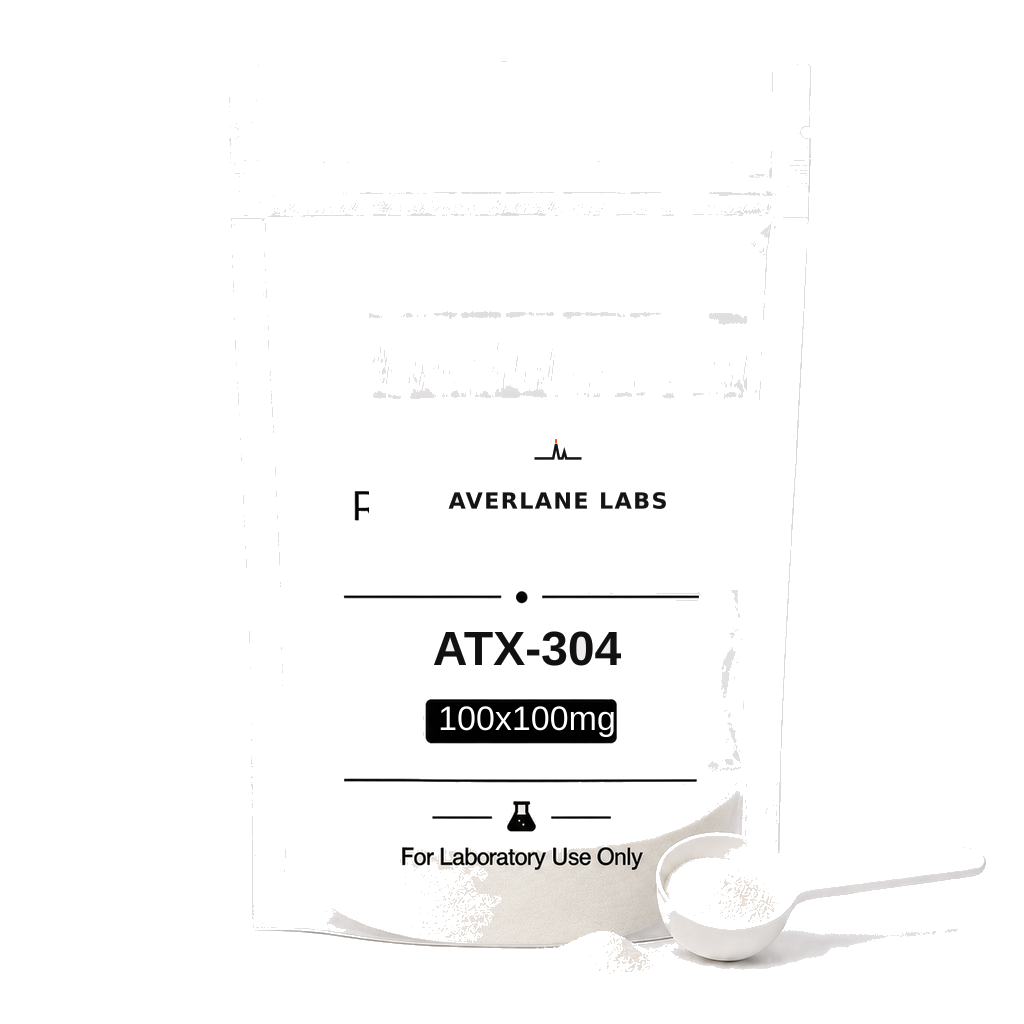
ATX-304 100x100mg
Certificate of Analysis available on request for the current lot.
Complete the setup
Reconstitution and bench supplies researchers pair with ATX-304 100x100mg

NOT FOR HUMAN CONSUMPTION
ATX-304, Comprehensive Scientific Review
ATX-304, formerly known as O304, is an investigational orally administered small molecule being developed by Amplifier Therapeutics and Cambrian Bio for obesity and related cardiometabolic disorders. It is generally described as an AMP-activated protein kinase (AMPK) network activator with additional effects on mitochondrial metabolism.
Its mechanism differs substantially from established and emerging incretin-based obesity therapies such as semaglutide, tirzepatide and retatrutide, and also from amylin-based agents such as cagrilintide and eloralintide. Those therapies primarily influence body weight by reducing hunger, increasing satiation and decreasing energy intake. ATX-304 is instead being developed around the hypothesis that pharmacological activation of cellular energy-sensing pathways can increase substrate oxidation, improve metabolic flexibility and raise whole-body energy expenditure.
This mechanistic distinction is scientifically important. Rather than relying predominantly on reduced caloric intake, ATX-304 is intended to influence the expenditure side of the energy-balance equation by altering how glucose and fatty acids are processed and by increasing cellular metabolic demand.
The available human evidence remains early. In a small randomized Phase 1b study in adults with obesity and prediabetes, treatment with ATX-304 increased resting metabolic rate by approximately 8% and was associated with reductions in liver fat, visceral adipose tissue and circulating triglycerides, together with an increase in adiponectin. However, overall body-weight reduction was minimal at the exposure tested.
ATX-304 should therefore not yet be regarded as a clinically established weight-loss therapy. Its development remains focused on determining whether higher exposures can translate the observed metabolic effects into meaningful and durable reductions in fat mass and body weight without compromising safety.
The compound remains investigational and has no marketing authorization for obesity, diabetes, metabolic liver disease, exercise enhancement or any other medical indication.
1. Potential Clinical Benefits Under Investigation
Potential benefit | Key take-aways |
|---|---|
1. Increased resting energy expenditure | In Phase 1b, ATX-304 increased resting metabolic rate by approximately 8%, providing early human evidence that its metabolic mechanism can translate beyond preclinical models. |
2. Visceral-fat reduction | Visceral adipose tissue declined despite minimal total body-weight change, raising interest in a potentially favorable effect on metabolically harmful fat depots. |
3. Liver-fat reduction | Human Phase 1b data showed reduced hepatic fat, consistent with preclinical evidence of increased lipid oxidation and reduced steatosis. |
4. Improved triglyceride metabolism | Circulating triglycerides decreased significantly, suggesting improved lipid handling and substrate utilization. |
5. Increased adiponectin | Adiponectin increased during treatment, potentially reflecting improved adipose-tissue function and insulin sensitivity. |
6. Potential insulin-sensitizing effects | Earlier O304 clinical work suggested modest improvements in fasting glucose and insulin resistance in people with type 2 diabetes receiving metformin. |
7. Potential vascular effects | Earlier human work reported reductions in blood pressure and improvements in peripheral microvascular perfusion. |
8. Exercise-mimetic metabolic effects | Animal studies showed improved endurance, cardiac function and metabolic adaptations resembling selected responses to exercise. |
9. Potential muscle-sparing fat loss | The mechanism has generated interest in whether increased energy expenditure could favor fat loss while preserving muscle, but this remains unproven in humans. |
10. Combination potential with GLP-1 therapies | Because ATX-304 targets energy metabolism rather than primarily appetite, it could theoretically complement incretin-based therapies. Human evidence is not yet available. |
The most distinctive potential benefit is the possibility of increasing energy expenditure rather than simply suppressing appetite. This would represent a fundamentally different route to creating negative energy balance. However, the Phase 1b findings also show the central limitation of the current evidence: metabolic activation has been demonstrated, whereas substantial human weight loss has not.
2. Molecular Mechanism of Action
2.1 AMPK Physiology
AMP-activated protein kinase is one of the body's central regulators of cellular energy homeostasis. It functions as an intracellular energy sensor and becomes especially active when cellular energy demand rises or energy availability falls.
Physiological AMPK activation occurs during fasting, exercise and other conditions associated with energetic stress. Once activated, AMPK shifts cellular metabolism toward pathways that restore energy availability. It increases glucose uptake, promotes fatty-acid oxidation and supports mitochondrial substrate utilization while reducing energetically expensive anabolic processes such as lipid and cholesterol synthesis.
AMPK therefore acts as a metabolic coordinator rather than a classical appetite hormone receptor.
Core AMPK Effects
Pathway | Functional consequence | Metabolic relevance |
Glucose uptake | Glucose transport and utilization ↑ | Improved peripheral glucose disposal |
Fatty-acid oxidation | Lipid oxidation ↑ | Greater use of stored and circulating fat |
Lipogenesis | Fat synthesis ↓ | Reduced metabolic storage |
Cholesterol synthesis | Cholesterol production ↓ | Potential lipid-profile effects |
Mitochondrial metabolism | Substrate utilization ↑ | Greater cellular energy turnover |
Energy sensing | Response to energetic stress ↑ | Improved metabolic flexibility |
ATX-304 was developed to pharmacologically enhance this network.
2.2 ATX-304 and AMPK Activation
The original mechanistic studies were performed when ATX-304 was still known as O304.
These experiments showed that the compound increases phosphorylation of AMPK at the activating Thr172 site. Rather than behaving simply as a conventional direct allosteric AMPK agonist, O304 appeared to stabilize the activated state of AMPK by reducing dephosphorylation of phosphorylated AMPK.
This distinction may be important because it suggests that ATX-304 amplifies physiologically initiated AMPK signaling instead of completely bypassing normal upstream control.
Experimental work indicated that the effect can occur across multiple AMPK heterotrimeric complexes. This broad activity is the reason the molecule has been described as a pan-AMPK activator and, more recently, an AMPK network activator.
The therapeutic hypothesis is that sustained enhancement of AMPK signaling across metabolically active tissues could increase glucose and fatty-acid utilization while reducing lipid storage.
2.3 Mitochondrial Effects
ATX-304 also appears to influence mitochondrial metabolism.
Preclinical studies have reported increases in cellular respiration and evidence of partial mitochondrial uncoupling. Under normal circumstances, mitochondria convert nutrient-derived energy into ATP with a certain degree of efficiency. When coupling becomes less efficient, more substrate must be oxidized to generate the same amount of usable cellular energy.
This can increase metabolic demand and, in principle, increase total energy expenditure.
This aspect of the mechanism is scientifically important but also creates a major safety question. Historical mitochondrial uncouplers such as 2,4-dinitrophenol caused uncontrolled heat production, hyperthermia and potentially fatal systemic toxicity.
ATX-304 does not appear to behave like a classical nonspecific uncoupler. Mechanistic work suggests that AMPK activation can occur without major depletion of cellular ATP. In the early Phase 1b program, investigators did not report meaningful increases in continuously monitored core body temperature or 24-hour heart rate at the tested exposure.
These findings are encouraging, but the safety of stronger and longer-lasting metabolic activation remains uncertain.
2.4 Peripheral Pharmacology
Experimental studies suggest that ATX-304 has limited penetration across the blood-brain barrier.
Its pharmacology is therefore expected to be predominantly peripheral rather than centrally appetite suppressive.
The most relevant tissues include skeletal muscle, liver, adipose tissue, vascular tissue and myocardium.
Tissue | Potential ATX-304 effect | Clinical implication under investigation |
Skeletal muscle | Glucose uptake and fatty-acid oxidation ↑ | Insulin sensitivity and substrate use |
Adipose tissue | Fat mobilization and metabolic signaling altered | Visceral-fat reduction |
Liver | Lipogenesis ↓ and lipid oxidation ↑ | Liver-fat reduction |
Vascular tissue | Endothelial and microvascular signaling altered | Perfusion and blood-pressure effects |
Heart | Myocardial energy metabolism altered | Cardiac efficiency and safety |
Whole body | Energy expenditure ↑ | Potential obesity efficacy |
This peripheral emphasis differentiates ATX-304 from many current obesity therapies whose efficacy depends heavily on central appetite signaling.
3. Pharmacokinetics and Administration
ATX-304 is an orally bioavailable small molecule.
Clinical studies have evaluated sodium-salt tablet formulations, and the current development concept centers on once-daily oral administration rather than weekly injection.
In the recent Phase 1b obesity and prediabetes study, participants received 400 mg once daily for eight weeks, followed by an optional open-label extension. Earlier studies conducted under the O304 designation used higher experimental exposures, including 1,000 mg per day in the short TELLUS study.
These doses are experimental clinical-trial regimens and should not be interpreted as approved or recommended dosing instructions.
Earlier pharmacokinetic work suggested that steady-state systemic exposure was reached after approximately two weeks of repeated treatment.
Pharmacokinetic Overview
Feature | Current understanding |
Molecule type | Small molecule |
Route | Oral |
Clinical formulation | Tablet / sodium-salt formulation |
Dosing frequency | Once daily in clinical development |
Phase 1b obesity dose | 400 mg once daily |
Earlier TELLUS dose | 1,000 mg/day |
Steady state | Approximately 2 weeks in earlier work |
Brain penetration | Limited in preclinical studies |
Approved dosing | None; investigational only |
Detailed contemporary pharmacokinetic parameters such as exact terminal half-life, exposure-response relationships and formulation-specific bioavailability remain less extensively published than for approved obesity therapies.
4. Preclinical Pharmacology
ATX-304 was originally investigated as O304 in experimental models of insulin resistance, diabetes and metabolic dysfunction.
In diet-induced obese mice, treatment increased AMPK signaling and skeletal-muscle glucose uptake while improving fasting glucose, hyperinsulinaemia and insulin sensitivity.
The compound also reduced body-fat accumulation and hepatic steatosis in several experimental systems.
A particularly important observation was that reductions in adiposity could occur without a corresponding reduction in food intake. This suggested that ATX-304 might influence body weight through increased energy expenditure and substrate oxidation rather than purely through appetite suppression.
Animal studies subsequently demonstrated increases in oxygen consumption, fatty-acid oxidation and whole-body energy expenditure.
Preclinical work also suggested cardiovascular effects. O304 increased myocardial glucose uptake, improved peripheral microvascular perfusion and produced favorable changes in cardiac physiology in some models.
Studies in aged mice additionally showed improved stroke volume, cardiac output, myocardial capillary density and exercise endurance.
Summary of Major Preclinical Findings
Domain | Observed effect |
AMPK signaling | Increased AMPK activation |
Glucose metabolism | Glucose uptake and insulin sensitivity improved |
Fat oxidation | Increased |
Body fat | Reduced in obesity models |
Liver fat | Reduced |
Energy expenditure | Increased |
Food intake | Not consistently reduced |
Microvascular perfusion | Improved |
Cardiac function | Improved in selected models |
Exercise capacity | Improved in aged mice |
These findings provide a strong mechanistic rationale but do not establish comparable effects in humans.
5. Early Clinical Evidence in Type 2 Diabetes
One of the earliest human proof-of-concept studies was the randomized, double-blind, placebo-controlled TELLUS Phase 2a trial.
The study enrolled 65 adults with type 2 diabetes who were receiving stable metformin therapy and evaluated O304 or placebo over 28 days.
Among participants with elevated baseline fasting glucose, fasting plasma glucose declined by approximately 0.60 mmol/L with O304 compared with approximately 0.10 mmol/L with placebo.
Measures of insulin resistance also improved within the treatment group.
The magnitude of the glycaemic effect was modest, and the study was short and exploratory. It did not establish ATX-304 as a clinically effective diabetes treatment.
Nevertheless, the study provided early evidence that systemic AMPK activation could influence human glucose metabolism.
Selected TELLUS Findings
Outcome | O304 finding | Interpretation |
Fasting glucose | Approximately −0.60 mmol/L in selected participants | Modest glucose-lowering signal |
HOMA-IR | Improved | Suggestive of improved insulin sensitivity |
Systolic blood pressure | Approximately −5.8 mmHg | Exploratory vascular signal |
Diastolic blood pressure | Approximately −3.8 mmHg | Exploratory vascular signal |
Microvascular perfusion | Improved | Potential endothelial/metabolic effect |
Treatment duration | 28 days | Too short for long-term conclusions |
The blood-pressure and microvascular findings remain scientifically interesting but require replication in larger modern trials.
6. Phase 1b Obesity and Prediabetes Study
The most relevant contemporary human evidence comes from a small randomized Phase 1b study involving 23 adults with obesity and prediabetes.
Participants received ATX-304 at 400 mg once daily or placebo for eight weeks, followed by an optional open-label extension.
The trial was designed primarily to determine whether the metabolic effects predicted from preclinical studies could be demonstrated in humans.
The study produced several encouraging translational signals.
Resting metabolic rate increased by approximately 8%, supporting the hypothesis that ATX-304 can increase whole-body energy expenditure.
Visceral adipose tissue and liver fat also declined, while plasma triglycerides decreased and adiponectin concentrations increased.
Key Phase 1b Findings
Parameter | Reported direction | Significance |
Resting metabolic rate | ≈ +8% | Direct human energy-expenditure signal |
Visceral adipose tissue | ↓ | Potentially favorable body-composition effect |
Liver fat | ↓ | Supports hepatic metabolic activity |
Triglycerides | ↓ | Suggests improved lipid metabolism |
Adiponectin | ↑ | Potential insulin-sensitivity signal |
Body weight | Minimal reduction | Major limitation of current efficacy evidence |
Core temperature | No meaningful increase reported | Early safety reassurance |
24-hour heart rate | No meaningful increase reported | Early cardiovascular reassurance |
The most important limitation is that overall body-weight loss remained minimal.
This means that ATX-304 has not yet demonstrated clinically meaningful obesity efficacy in humans.
The developers have indicated that systemic exposure in this trial was below the range predicted from preclinical studies to produce substantial weight loss. Whether higher exposure will produce a stronger efficacy signal without compromising safety remains one of the central questions for Phase 2.
7. Energy Expenditure and the Obesity Hypothesis
The obesity hypothesis for ATX-304 is fundamentally different from that of most current high-efficacy obesity therapies.
GLP-1, GIP and amylin-based treatments predominantly reduce energy intake. They decrease hunger, increase satiation and reduce caloric consumption.
ATX-304 attempts to influence the opposite side of energy balance by increasing energy utilization.
Therapeutic strategy | Primary physiological effect | Expected influence on energy balance |
GLP-1 / GIP agonism | Appetite and food intake ↓ | Energy intake ↓ |
Amylin agonism | Satiation and meal size ↓ | Energy intake ↓ |
ATX-304 / AMPK pathway | Substrate oxidation and metabolic demand ↑ | Energy expenditure potentially ↑ |
Combination approach | Intake ↓ + expenditure ↑ | Potentially greater negative energy balance |
If resting metabolic rate rises while caloric intake remains stable, additional energy must theoretically be supplied from stored substrates such as adipose tissue.
However, human energy balance is highly adaptive.
An increase in expenditure may provoke compensatory increases in hunger, food intake or reductions in spontaneous physical activity. Long-term clinical efficacy will therefore depend on whether the metabolic effect can be sustained without being neutralized by compensatory physiology.
8. Body Composition
Body composition may ultimately be more informative for ATX-304 than body weight alone.
Traditional appetite-suppressing therapies produce negative energy balance through reduced caloric intake. As weight falls, both adipose tissue and some lean tissue are generally lost.
ATX-304 is conceptually different because it aims to increase substrate oxidation while allowing more normal caloric intake.
In theory, this could promote preferential fat utilization and reduce the proportion of lean tissue lost during weight reduction.
The early reduction in visceral fat despite minimal change in total body weight is therefore scientifically interesting.
Potential Body-Composition Advantages Under Investigation
Potential effect | Current evidence |
Total fat loss | Preclinical evidence |
Visceral-fat reduction | Early human Phase 1b signal |
Liver-fat reduction | Early human signal |
Lean-mass preservation | Hypothesis; not established clinically |
Muscle strength preservation | Unknown |
Improved physical function | Preclinical rationale only |
There is currently no convincing human evidence that ATX-304 preserves skeletal muscle during substantial weight loss.
Future trials will therefore require DXA or MRI assessment together with measurements of strength and physical performance.
9. Potential Role in MASLD and MASH
ATX-304 has shown particularly interesting effects in experimental metabolic liver disease.
Preclinical studies indicate that treatment can reduce hepatic steatosis, increase fatty-acid oxidation and alter pathways involved in cholesterol metabolism, lipid transport and oxidative stress.
In some experimental models, ATX-304 also attenuated progression of liver fibrosis.
These findings are biologically consistent with AMPK activation. AMPK promotes fatty-acid oxidation while suppressing anabolic lipid synthesis, thereby reducing the tendency for lipids to accumulate within hepatocytes.
The reduction in liver fat seen in the Phase 1b obesity and prediabetes study provides an early translational signal.
Potential Liver Effects
Pathway or outcome | ATX-304 signal |
Hepatic fatty-acid oxidation | ↑ |
Lipogenesis | ↓ |
Liver fat | ↓ |
Oxidative stress | ↓ in preclinical studies |
Fibrosis progression | Reduced in selected animal models |
MASH resolution | Not established |
Fibrosis regression in humans | Not established |
Clinical liver outcomes | Unknown |
A reduction in liver fat alone does not establish treatment efficacy for MASH.
Dedicated clinical liver studies with imaging, biomarkers and eventually histology will be needed.
10. Cardiovascular and Vascular Effects
AMPK has extensive roles in cardiovascular physiology.
It influences myocardial energy metabolism, endothelial signaling, glucose utilization and responses to cellular stress.
Preclinical O304 studies showed increased cardiac glucose uptake, improved cardiac function and increased microvascular density.
These findings were notable because some other experimental broad AMPK agonists produced pathological cardiac glycogen accumulation and hypertrophy.
O304 appeared pharmacologically different in early experimental work.
The TELLUS study also reported reductions in systolic and diastolic blood pressure and improved peripheral microvascular perfusion.
Cardiovascular Evidence
Outcome | Evidence level |
Blood-pressure reduction | Early human exploratory signal |
Microvascular perfusion | Early human signal |
Cardiac glucose uptake | Preclinical |
Cardiac output | Improved in animal models |
Myocardial capillary density | Improved in aged mice |
Heart failure outcomes | Not established |
Myocardial infarction reduction | Not established |
Stroke reduction | Not established |
Cardiovascular mortality reduction | Not established |
These findings justify further investigation but should not be interpreted as proof of cardiovascular-event reduction.
11. Exercise-Mimetic Potential
ATX-304 has sometimes been described as a possible pharmacological exercise mimetic because AMPK activation is one of the major intracellular responses to exercise.
During sustained physical activity, ATP consumption rises and AMPK becomes activated. This increases glucose uptake, promotes fatty-acid oxidation and supports mitochondrial adaptation.
By pharmacologically enhancing AMPK signaling, ATX-304 may reproduce selected metabolic features of this response.
Animal studies support this concept. Aged mice treated with O304 showed improved metabolic function, cardiac physiology and endurance capacity.
However, physical exercise produces far broader biological effects than AMPK activation alone.
Exercise also provides mechanical loading of muscle and bone, cardiovascular conditioning, neuromotor training, changes in inflammatory signaling and many endocrine adaptations.
ATX-304 should therefore not be regarded as a replacement for exercise.
A more accurate description is that it may mimic selected exercise-associated metabolic signaling pathways.
12. Potential Combination With GLP-1 and Other Obesity Therapies
One of the strongest long-term rationales for ATX-304 is combination therapy.
Current high-efficacy obesity drugs mainly reduce energy intake.
ATX-304 may potentially increase energy expenditure.
Combining these mechanisms could theoretically influence both sides of the energy-balance equation.
Potential Combination Architecture
Component | Primary effect |
GLP-1 / GIP therapy | Hunger ↓, food intake ↓ |
Amylin therapy | Satiation ↑, meal size ↓ |
ATX-304 | Substrate oxidation ↑, resting energy expenditure potentially ↑ |
Combined strategy | Energy intake ↓ while energy utilization ↑ |
Preclinical studies have investigated ATX-304 in combination with semaglutide and after semaglutide withdrawal.
Potential clinical advantages could include greater fat loss, less weight-loss plateauing, improved weight maintenance or a more favorable fat-to-lean tissue loss ratio.
However, none of these benefits has yet been demonstrated in controlled human trials.
13. Safety and Tolerability
The available human safety database remains small.
In the recent Phase 1b obesity and prediabetes study, treatment-emergent adverse events were described as predominantly mild, with overall frequencies broadly similar to placebo.
Earlier O304 clinical studies also described the compound as generally well tolerated.
Nevertheless, these studies were small and short.
They cannot reliably identify uncommon, cumulative or long-term toxicities.
Mitochondrial Safety
The most important theoretical safety issue is excessive metabolic activation.
Because ATX-304 influences mitochondrial respiration and may produce partial uncoupling, possible concerns include hyperthermia, tachycardia, increased cardiac workload and excessive catabolism.
At the tested Phase 1b exposure, no meaningful increase in continuously monitored core body temperature or 24-hour heart rate was reported.
This provides early reassurance but does not establish the safety of higher exposures.
Cardiac Safety
AMPK plays a central role in myocardial energy metabolism.
Some experimental AMPK agonists have produced cardiac hypertrophy or glycogen accumulation in preclinical studies.
O304 did not appear to produce the same profile in early work, but long-term human cardiac imaging and monitoring remain necessary.
Hypoglycaemia
ATX-304 is not primarily an insulin secretagogue.
Its glucose-lowering effects appear more related to increased glucose disposal and improved insulin sensitivity.
Clinically important hypoglycaemia would therefore not necessarily be expected from ATX-304 alone, but the risk may differ in people using insulin or other glucose-lowering therapies.
Gastrointestinal Effects
ATX-304 does not primarily activate GLP-1 or amylin receptors.
The prominent nausea and gastric-emptying effects associated with some appetite-based therapies therefore may not define its clinical tolerability profile.
However, the database is currently too small for definitive conclusions.
Safety Questions Still Requiring Clarification
Safety domain | Current status |
Hyperthermia | No major early signal; higher-dose risk unknown |
Tachycardia | No major early signal |
Cardiac hypertrophy | Not observed as a major signal so far; long-term data needed |
ATP depletion | Not supported by current mechanistic work |
Hypoglycaemia | Expected to depend partly on concomitant therapy |
GI tolerability | Early profile appears different from incretins |
Rare adverse events | Unknown |
Multi-year safety | Unknown |
14. Phase 2 Development Program
Following the early translational findings, ATX-304 is progressing toward a more definitive Phase 2 program.
The planned program includes the REWIRE studies.
REWIRE-1
REWIRE-1 is intended to investigate higher ATX-304 exposures with particular emphasis on metabolic physiology, muscle function and lipid utilization.
Important questions include whether stronger AMPK and mitochondrial activation can increase energy expenditure without impairing physical function or producing excessive metabolic stress.
REWIRE-2
REWIRE-2 is intended to provide a more direct obesity proof-of-concept assessment.
Its central objective is expected to be determining whether the increase in resting metabolic rate observed in Phase 1b can translate into clinically meaningful body-weight and fat-mass reduction.
Key Questions for Phase 2
Question | Why it matters |
Can higher exposure produce substantial weight loss? | Central efficacy question |
Does resting energy expenditure rise further? | Tests dose-response |
Is fat loss preferential to lean-mass loss? | Determines quality of weight loss |
Can the effect be sustained? | Important for chronic therapy |
Does hunger compensate for higher expenditure? | Could limit efficacy |
Does higher exposure affect heart rate or temperature? | Major safety issue |
Are muscle strength and performance preserved? | Important functional outcome |
15. Emerging Clinical Interests
Field | Rationale | Current status |
Obesity | Increased energy expenditure and fat oxidation | Phase 2 development |
Visceral obesity | Early visceral-fat reduction | Early human signal |
Prediabetes | Improved metabolic flexibility | Phase 1b |
Type 2 diabetes | Glucose disposal and insulin-sensitivity effects | Early human evidence |
MASLD/MASH | Reduced liver fat and altered lipid metabolism | Preclinical + early human liver-fat signal |
Hypertriglyceridaemia | Triglyceride reduction | Early human signal |
Cardiovascular metabolism | AMPK-related cardiac and vascular effects | Exploratory |
Microvascular dysfunction | Improved perfusion | Early human signal |
Physical-function decline | Exercise-mimetic hypothesis | Preclinical |
Lean-mass preservation | Possible favorable tissue partitioning | Hypothesis |
Combination with incretins | Energy intake ↓ + expenditure ↑ | Preclinical |
Weight-loss maintenance | Potential counteraction of metabolic adaptation | Future research question |
Healthy aging | AMPK and mitochondrial metabolic regulation | Experimental |
16. Comparative Pharmacology Matrix
Feature | ATX-304 | Eloralintide | Tirzepatide | Retatrutide |
Molecule type | Small molecule | Peptide | Peptide | Peptide |
Route | Oral | Subcutaneous | Subcutaneous | Subcutaneous |
Principal target | AMPK network / mitochondrial metabolism | Selective amylin receptor | GIP + GLP-1 | GIP + GLP-1 + glucagon |
Incretin activity | None | None | Yes | Yes |
Primary appetite effect | Not established as primary mechanism | Strong | Strong | Strong |
Primary energy-balance effect | Energy expenditure / substrate utilization | Energy intake ↓ | Energy intake ↓ | Energy intake ↓ + expenditure contribution |
Resting metabolic rate effect | ≈ +8% Phase 1b signal | Not primary mechanism | Not primary mechanism | Potential contribution via glucagon |
Human weight-loss efficacy | Not yet established; minimal at tested Phase 1b exposure | Up to ~20% in Phase 2 | Very high | Very high investigational efficacy |
Liver-fat signal | Early human + preclinical | Secondary to weight reduction | Strong metabolic effect | Strong potential |
Visceral-fat signal | Early human | Expected with weight loss | Established with weight loss | Under investigation |
Lean-mass preservation | Hypothesis | Preclinical signal | Under study | Under study |
GI nausea mechanism | Not primarily GLP-1/amylin mediated | Amylin-related | GLP-1-related | Incretin-related |
Exercise-mimetic rationale | Yes | No | No | Limited |
Combination rationale | Strong with appetite suppressants | Strong with incretins | Can combine with non-incretin pathway | Already multi-pathway |
Development stage | Early Phase 2 development | Phase 3 | Approved | Investigational |
Approval status | Investigational | Investigational | Approved | Investigational |
Cross-trial comparisons should be interpreted cautiously because ATX-304 has not yet undergone an obesity efficacy trial comparable in size, duration or design to the major incretin and amylin programs.
17. Major Unknowns
The most important unresolved question is whether ATX-304 can actually produce clinically meaningful weight loss in humans.
The Phase 1b study demonstrated increased resting metabolic rate and favorable changes in visceral fat, liver fat and metabolic biomarkers, but overall body-weight reduction remained minimal.
It is possible that higher exposures will produce stronger effects, but this remains unproven.
A second major question is whether increased resting energy expenditure can be maintained over many months. Human metabolism adapts strongly to sustained energy deficits, and compensatory increases in appetite or reductions in spontaneous activity could partially neutralize the effect.
The long-term mitochondrial safety profile is another major unknown. Short-duration studies cannot establish whether chronic increases in energy expenditure can be achieved without hyperthermia, cardiovascular stress or excessive catabolism.
Human body-composition data are also insufficient. The concept of preferential fat loss with relative muscle preservation is attractive, but it remains speculative until larger trials include direct imaging and functional measurements.
The role of ATX-304 in metabolic liver disease is similarly unresolved. Early reductions in liver fat are promising but do not establish improvement in MASH inflammation, fibrosis or clinical liver outcomes.
Combination therapy is also still theoretical. The biological logic of reducing energy intake while simultaneously increasing energy expenditure is strong, but human data are required to establish whether efficacy is additive and whether tolerability remains acceptable.
18. Future Directions
The next phase of ATX-304 development will need to determine whether stronger metabolic activation can generate substantial fat loss while maintaining an acceptable safety margin.
Dose-ranging studies will be particularly important because the therapeutic concept depends on identifying an exposure high enough to meaningfully increase energy expenditure but low enough to avoid excessive mitochondrial or cardiovascular stress.
Future studies should characterize not only scale weight but also resting metabolic rate, total daily energy expenditure, respiratory quotient and substrate oxidation.
Body composition should be assessed with DXA or MRI, including total fat, visceral fat, liver fat and skeletal muscle.
Strength, gait, physical performance and exercise capacity will also be important if the muscle-preservation and exercise-mimetic hypotheses are to be tested properly.
Dedicated MASLD and MASH studies could eventually evaluate MRI-PDFF, liver enzymes and histological endpoints.
Combination trials with semaglutide, tirzepatide or other appetite-suppressing therapies represent another logical direction.
A particularly interesting future question is whether ATX-304 could help maintain weight loss after discontinuation of incretin therapy by counteracting reductions in energy expenditure that often accompany weight loss.
That possibility remains speculative.
19. Regulatory Landscape
Characteristic | Current status |
Development code | ATX-304 |
Former designation | O304 |
Original development | Betagenon |
Current development | Amplifier Therapeutics / Cambrian Bio |
Molecule type | Oral small molecule |
Primary pharmacology | AMPK network activation with mitochondrial metabolic effects |
Current clinical stage | Early Phase 2 development |
Obesity approval | No |
Diabetes approval | No |
MASLD/MASH approval | No |
Exercise-enhancement approval | No |
Overall regulatory status | Investigational |
Its eventual clinical positioning will depend heavily on the results of the upcoming Phase 2 program.
20. Overall Assessment
ATX-304 is one of the more scientifically distinctive emerging metabolic therapies because it approaches obesity from a fundamentally different direction than most successful modern weight-loss drugs.
Instead of primarily suppressing appetite, ATX-304 attempts to increase cellular metabolic activity through AMPK and mitochondrial pathways.
The core hypothesis is that sustained activation of these systems could increase glucose utilization, fatty-acid oxidation and whole-body energy expenditure.
The strongest contemporary human evidence is the approximately 8% increase in resting metabolic rate observed in a small Phase 1b study, together with reductions in visceral adipose tissue, liver fat and triglycerides and an increase in adiponectin.
These findings provide evidence that ATX-304 is biologically active in humans and that its effects extend beyond conventional glucose lowering.
However, the same study also revealed the major limitation of the current evidence base:
overall weight loss was minimal at the exposure tested.
ATX-304 therefore remains an early proof-of-concept metabolic therapy rather than a demonstrated high-efficacy obesity drug.
Its future importance will depend on whether higher exposures can convert increased metabolic activity into substantial and durable reductions in fat mass and body weight while maintaining acceptable mitochondrial, cardiovascular and muscular safety.
If successful, ATX-304 could provide a genuinely complementary pathway to GLP-1, GIP and amylin therapies.
The most compelling long-term pharmacological architecture would combine reduced energy intake through incretin or amylin signaling with increased energy utilization through AMPK and mitochondrial metabolism.
That approach could theoretically influence both sides of the energy-balance equation and potentially produce a different efficacy and body-composition profile from appetite suppression alone.
For now, however, this remains an experimental concept.
ATX-304 should therefore be regarded as a promising but still early-stage investigational metabolic therapy with compelling mechanistic biology, encouraging preliminary human metabolic effects and as yet unproven major weight-loss efficacy.
Selected References
Steneberg P, Lindahl E, Dahl U, et al., JCI Insight (2018).
Foundational characterization of O304, including AMPK activation, glucose metabolism, microvascular effects and early human proof-of-concept in type 2 diabetes.
Ericsson M, Steneberg P, Nyrén R, et al., Communications Biology (2021).
Preclinical evaluation of O304 in aged mice, including metabolic function, cardiac physiology and exercise capacity.
Holm E, et al., JCI Insight (2025).
Preclinical investigation of ATX-304 in metabolic liver disease, including lipid oxidation, oxidative stress, hepatic steatosis and fibrosis biology.
Cambrian Bio, American Diabetes Association Scientific Sessions (2026).
Phase 1b study of ATX-304 in adults with obesity and prediabetes, including resting metabolic rate, visceral adipose tissue, liver fat and metabolic biomarkers.
Amplifier Therapeutics / Cambrian Bio.
Current ATX-304 development program and planned REWIRE Phase 2 studies.
Researcher reviews
No reviews yet for this lot line. Verified purchasers can leave the first one.
Reviews
There are no reviews yet.